November 17, 2025 | Memo
Maritime Protection of Taiwan’s Energy Vulnerability
Executive Summary
Subjugating Taiwan remains a core objective for China’s General Secretary Xi Jinping — not simply as a territorial ambition, but as a defining test of the Chinese Communist Party’s (CCP’s) legitimacy and his own personal legacy. For Xi, the island represents both the unfinished business of national rejuvenation and a dangerous symbol of democratic defiance on China’s doorstep. So long as Taiwan remains outside Beijing’s control, Xi’s vision of a strong, unified China and the CCP’s narrative of inevitable resurgence will remain fundamentally incomplete.
To advance its objective, Beijing is already employing a mix of coercive tools — cyber operations, economic pressure, maritime saber-rattling, and gray-zone tactics — while steadily building the capability to escalate toward a blockade, quarantine, or even a full-scale invasion, should China’s leadership make that decision. With the world’s largest navy and coast guard, China now has sufficient forces to disrupt commercial traffic going into and coming out of Taiwan. The greater challenge lies in sustaining complex maritime operations, an area where Chinese forces still lag behind more experienced Western navies.
However, recent military exercises suggest the People’s Liberation Army Navy (PLA-N) is determined to close that gap. Within a few years, it may possess the operational proficiency required not just to act on Xi Jinping’s threats of reunification by force, but also to create a sense of inevitability — signaling to Taipei and the region that resistance is futile and capitulation is the safer path. Even short of direct military action, Beijing may leverage its maritime forces to generate strategic uncertainty: raising insurance premiums, deterring commercial shippers, and gradually choking off critical trade flows to and from Taiwan. The goal is to impose economic and psychological pressure without firing a shot, forcing Taiwan’s partners to weigh the cost of engagement against the risks of entanglement.
Meanwhile, the island is heavily dependent on imports for numerous critical goods, but its greatest vulnerability is its heavy reliance on imported energy. Within that domain, Taiwan’s greatest weakness is its complete dependence on imports of liquefied natural gas (LNG), the source of nearly half of the island’s electrical power. Since it has enough storage for only 10 days’ worth of LNG at normal usage rates, a disruption of imports would soon confront Taipei with difficult decisions about how to allocate electric power between military users, civilian homes, and high-end manufacturing. Shortages in any of these three sectors could result in submission to Beijing.
This study examines the risks associated with Taiwan’s dependence on imported LNG and the ways that Beijing might exploit that vulnerability in the maritime domain. While U.S. and allied military planning often focuses on scenarios in which China implements a full blockade of the island, Beijing would prefer to compel Taiwanese submission without resorting to measures that others are likely to see as acts of war and respond measure for measure. Since Taiwan receives only one tanker load of LNG on a typical day, various forms of harassment could delay and disrupt its supplies without appearing to constitute overt aggression.
The response of the global shipping and insurance industries could play a decisive role in such a gray-zone conflict. The cost of insurance can weigh decisively on shipping industry assessments of whether plying certain trade routes is economically viable. If Lloyd’s of London’s Joint War Committee (JWC) adds the waters around Taiwan to its Listed Areas, supplies of LNG could evaporate. Yet history shows that there are effective responses to this kind of intimidation.
This paper examines three maritime precedents directly relevant to the Taiwan challenge. The first is the U.S. reflagging of Kuwaiti tankers in the late 1980s to protect them from Iranian attacks. Combined with escort and convoy operations, reflagging might be able to secure Taiwan’s LNG supply lines primarily by sending Beijing a clear indication of American resolve. The second precedent to consider is the UK-led EU mission to protect merchant vessels from Somali pirates in 2008. That effort illustrates the importance of coordination with commercial shipping lines, the need for extensive information sharing when operating in crowded waters, and the value of clearly demarcated maritime security corridors for safe passage. Finally, an examination of Operation Prosperity Guardian, the multinational mission to protect commercial shipping from Yemen’s Houthi rebels, shows how defensive efforts can be tactically effective but strategically insufficient. While the operation protected individual ships, the industry as a whole rerouted maritime traffic away from the Red Sea and other affected waters. After laying out these precedents, the paper takes a closer look at how to adapt past approaches to the specific demands of a Taiwan-focused scenario.
Finally, the paper offers two sets of recommendations. The first addresses how the United States and its partners and allies should prepare maritime capabilities for potential reflagging, escort, and convoy operations in the waters around Taiwan. It calls for both planning and exercises that lay the groundwork for multistate military cooperation as well as information sharing with commercial firms and vessels. The second set of recommendations focuses on the urgent task of increasing Taiwanese resilience in the face of Chinese efforts to cut off its supply of LNG. First and foremost, Taipei needs to rapidly and dramatically increase its capacity for LNG storage. It also needs to diversify its sources of LNG supply, acquire LNG tankers, and arrange for nearby partners like Japan and South Korea to serve as additional storage hubs.
Enhancing Taiwan’s ability to weather Chinese pressure on its energy supplies may be one of the most effective ways for the United States and other concerned partners to change Beijing’s calculus, thereby deterring aggression and helping to preserve stability in the Taiwan Strait.
The Vulnerability of Taiwan’s LNG Supply
Taiwan’s energy dependence represents one of its most acute strategic vulnerabilities. As a highly industrialized economy with virtually no domestic fossil fuel production, Taiwan relies almost entirely on seaborne energy imports. However, the island’s dependence on imported LNG for its entire supply of natural gas represents a far greater vulnerability than its reliance on inbound shipments of coal and oil. Taiwan generates nearly half of its electrical power from LNG but has storage capacity for only 10 days’ worth of the fuel, so a disruption of supply could quickly lead to power shortages. Beijing could also employ physical sabotage or cyberattacks to disable the specialized terminals necessary to offload LNG by converting it back into a gas. Lastly, in light of high global demand for relatively few LNG tankers, waylaying the handful of ships that deliver Taiwan’s LNG could result in an extended disruption of imports.
Historically, Taiwan has powered its electrical grid with a mix of LNG, coal, nuclear, and renewables. Over the past decade, Taipei has systematically phased out nuclear power, which supplied 20 percent of Taiwan’s electricity as recently as 2010. As of 2024, natural gas accounted for 47.2 percent of power generation, followed by coal at 31.1 percent and hydro and non-hydro renewables at 13.1 percent.1 Prior to the closure of the last nuclear plant on May 15, 2025, nuclear power provided about five percent of generation capacity, so reliance on LNG and coal has crept even higher.
Moreover, while the rise of a more-liquid spot market has introduced some flexibility, LNG trade remains structurally constrained because it cannot be easily transshipped, rerouted, or sourced from multiple global suppliers like crude oil. If China were to disrupt the supply of LNG, the island’s coal and renewable capacity could not offset the loss. In August, the island held a referendum on reopening the door to nuclear power, and while nearly three out of four voters supported the measure, it fell short of the overall number of votes needed to pass.
Whereas Taipei has built up its coal bunkering capacity so it can store about 39 days’ worth of coal at normal usage rates, the island can store only 10 days’ worth of LNG.2 In addition, most of Taiwan’s natural gas storage is above ground, making it vulnerable to physical attack.3 Since the island, on average, receives a single LNG tanker per day, a single interdiction could have a major impact. The island’s LNG terminals are also vulnerable in the event of a hot war, since they are all on its western shore, facing the mainland. The two main terminals are located at Yung-An (Kaohsiung) and Taichung, while a third, at Taoyuan, has recently come online.4
LNG tankers must dock at such purpose-built terminals, yet their location exposes them to relatively short-range Chinese missiles or airstrikes, or, more likely, gray-zone harassment by any number of CCP entities. Specifically, China may seek to block the operation of one or more Taiwanese LNG terminals by creating an incident that appears to be the result of either negligence or an accident. For example, between November 21 and December 1, 2023, a single Chinese vessel’s malfunction temporarily halted operations at the terminal on Curtis Island near Gladstone, Australia.5 Even if Beijing did not cause a particular disruption, it could exploit it as part of a broader pressure campaign. Other potential Chinese targets include the subsea pipelines that transport gas from Taiwan’s LNG import terminals to storage facilities and power plants. By employing a cyberattack on the pipelines, Beijing could stay below the threshold of open war. It could also employ sabotage of the kind that damaged the Nord Stream 2 pipeline in the Baltic Sea. While China has, to date, demonstrated the ability to target only undersea communications cables, Taipei and Washington should anticipate the possible sabotage of undersea pipelines as well.6
One alternative to onshore LNG terminals consists of floating storage and regasification units (FSRUs), which are faster to deploy and comparatively cost-effective. However, deploying a new FSRU can still take one to two years, and Taiwan has not placed any orders.7
The likelihood of disruption also depends on both the source of the LNG and the ownership of the vessels that deliver it. In 2024, Taiwan imported 38 percent of its LNG from Australia, 25 percent from Qatar, and 10 percent from the United States.8 China is a major buyer of both Australian and Qatari gas, purchasing four times more LNG from Australia and three times more LNG from Qatar than Taiwan does,9 so Beijing may exert effective pressure on Canberra and Doha to delay or block shipments to Taiwan.10
China could also lean on ship owners not to deliver LNG to Taiwan. In 2024, Japanese-owned vessels delivered 36 percent of the island’s LNG, although Tokyo is unlikely to yield to pressure. Greek vessels delivered another 13 percent; their response to any pressure would likely be determined by company exposure in China as well as any mitigations or other incentives to continue trading with Taiwan. A greater risk is that Qatari and Chinese vessels would not make deliveries — each currently accounts for 10 percent of the island’s LNG imports. Presently, Taiwan has no way to compel the delivery of gas it has purchased — and no ability to shield these or other cargoes from direct or indirect Chinese pressure.
Chinese Capability To Impose Its Will at Sea
Situated only 80 miles from Taiwan, China has built a significant maritime surface force, consisting of the world’s largest navy, with almost 400 ships; the world’s largest coast guard, with nearly 225 corvette-sized hulls; and the world’s largest flotilla of maritime militia consisting of more than 1,000 ships.11 Combined with air and space surveillance, these forces are sufficient to both monitor and control the waters around Taiwan and all approaches to it along the First Island Chain — the archipelago closest to the Asian mainland. Through exercises and operations, Beijing has persistently improved its ability to conduct interdictions at sea. While China does not have the experience that America and its allies and partners have in conducting complex, distributed maritime operations, Beijing is progressing toward a point where it could disrupt the flow of LNG to Taiwan.
International law recognizes three types of interventions in maritime trade: blockades, embargoes, and quarantines. Specific rules govern when and how a state may engage in these actions. (See below “Types of Interventions.”) China could openly declare a blockade, embargo, or quarantine, but it seems more likely that Beijing would preserve its flexibility by avoiding these labels while employing military exercises and other undeclared means of pressure short of war to coerce Taiwan. Even now, Chinese exercises serve to increase tensions and broadly escalate global risk perceptions of trade with Taiwan.
Types of Interventions in Maritime Trade According to International Legal Definitions
During a blockade, naval forces prevent vessels, aircraft, or goods from entering or leaving the ports or coastline of an enemy. During wartime, blockades are lawful under international law, assuming they are declared, impartially applied to all vessels, respect neutral trade, and do not intentionally starve or deny essential services to civilian populations. Blockades themselves, however, can be viewed as a form of armed conflict, something Beijing may wish to avoid.
Whereas a blockade targets the ingress or egress of a port, an embargo can occur anywhere, including on the high seas. Embargoes have come to be commonly understood as an instrument of the United Nations Security Council, authorized under resolutions. UN-authorized embargoes were used to hinder the flow of weapons in the 1990s Yugoslav conflicts, for example, and are still in force against North Korea. An embargo prohibits the flow of maritime trade by restricting either the ships of the state imposing the embargo or the ships of an adversarial state. Given the increasing reach of the CCP’s maritime forces, it could utilize embargo-like tactics to interfere with Taiwan’s imports well away from the island.
A country imposes a quarantine on itself or on ships and goods coming from another state or region to prevent the movement of ships, goods, and people. While quarantines are traditionally associated with public health measures, countries have historically also used them to exercise political and economic leverage under the guise of medical concerns. Quarantines usually involve the detention or delay of vessels coming from the “infected” ports or region, and inspections of cargo and crew. A quarantine could also be declared on security grounds. The United States, for example, declared a security quarantine against Cuba during the 1962 missile crisis, a precedent Beijing might exploit.
Beijing has used its full array of naval and coast guard forces in numerous blockading exercises and military drills over the past several years. In October 2024, China conducted Joint Sword 2024-B, a significant exercise near Taiwan simulating scenarios of encircling and blockading the island.12 During that exercise, the island observed a record number of military aircraft sightings in a single day. In December 2024, China conducted a major exercise with more than 100 vessels deployed across the region from the South China Sea to Japan’s Ryukyu Islands.13 The vessels practiced attacking foreign ships, blockading sea routes, and intercepting merchant vessels, as well as creating maritime barriers to restrict entry into the First Island Chain. All these exercises served as practical rehearsals for potential blockades, allowing China to refine its strategies without engaging in direct conflict.
Beyond large-scale exercises, Beijing’s only attempt to simulate a quarantine-like operation came in April 2023, when it announced a three-day inspection regime targeting Taiwanese vessels transiting to and from the mainland.14 Taipei directed its vessels to refuse to comply, and China has not repeated this action, though it may attempt to do so in the future. Yet Beijing has repeatedly demonstrated its capacity to adapt quickly and may be preparing to apply lessons learned in future attempts. The window for the United States and its allies to deter or disrupt Beijing’s planning before such tools mature into credible options is closing but is not yet closed.
For all its preparation, China’s ability to sustain a complex, real-world blockade, embargo, quarantine, or similar action remains largely untested. Western experience of such operations, for example during the Yugoslav wars of the 1990s or against North Korea, highlights the challenges of identifying, tracking, and targeting the right ships in densely navigated waters. Even when merchant vessels are seeking assistance, as was the case in the EU’s counter-piracy mission in the Indian Ocean, maintaining an accurate picture of thousands of monthly transits is extremely difficult. Especially during the early stages of any Chinese action, crews would likely be unaware of breaking events, meaning China could be facing thousands of ship movements through densely packed waters while it attempts to coerce Taiwan.
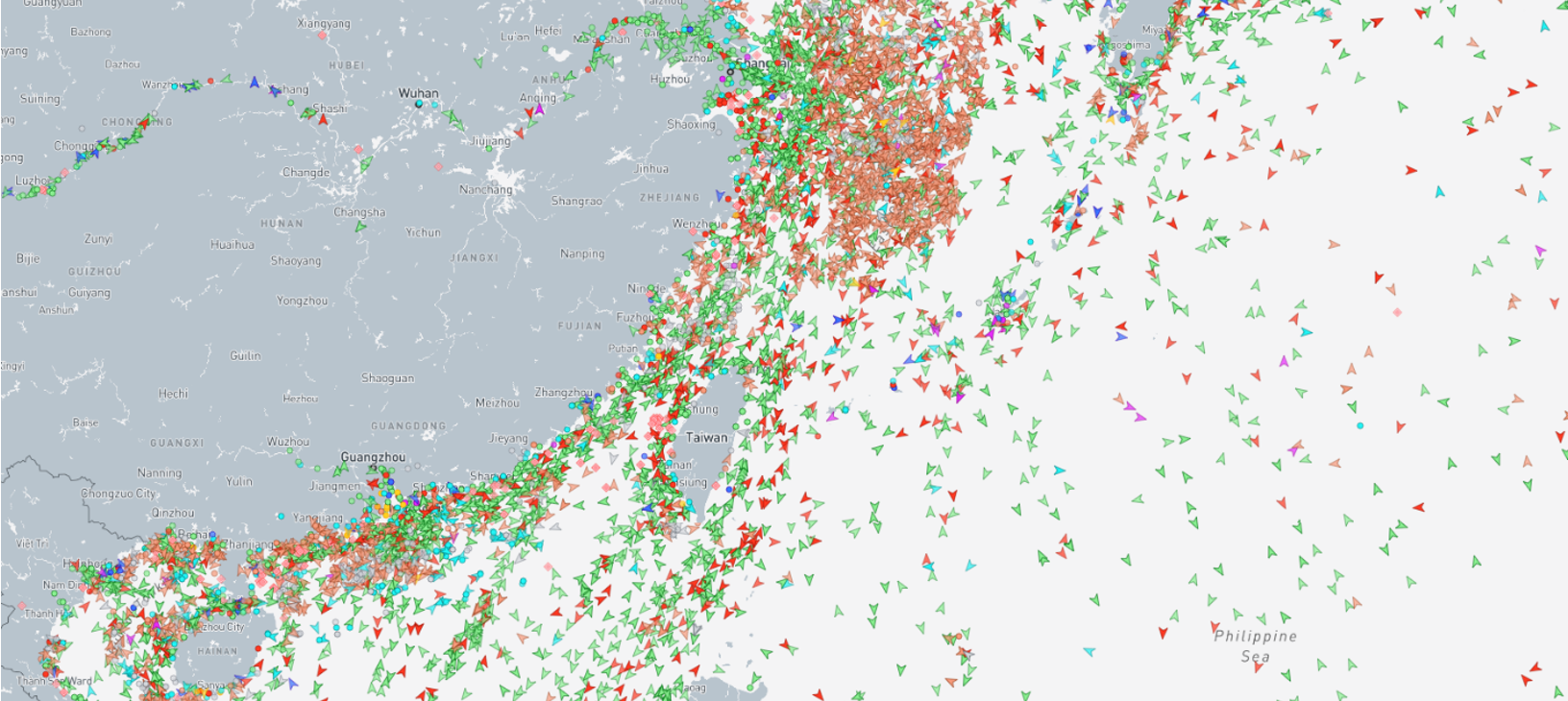
Screenshot showing typically high levels of maritime traffic around Taiwan. Green arrows represent cargo vessels, red arrows are tankers, and blue arrows are tugs and special craft. Source: MarineTraffic. Screenshot provided by MarineTraffic, a ship tracking and maritime analytics provider. (https://www.marinetraffic.com)
Besides operational challenges, legal concerns will shape both China’s potential actions and other states’ responses. The CCP is already expanding its array of lawfare measures to diplomatically isolate Taipei and create a legal basis for more aggressive maritime actions.15 One point of vulnerability for Taiwan is that few countries recognize it as a sovereign state. Even Washington has only unofficial relations with Taipei. If Taiwan were sovereign, other states would have a clearer sense of how to apply international law and related norms, as terms like blockade, embargo, and quarantine traditionally describe interactions between sovereign states.16
In light of Taiwan’s unclear status, China may seek to frame its intervention as a matter of domestic law enforcement. Specifically, it may invoke its 2021 coast guard and maritime safety laws, which grant the Chinese Coast Guard (CCG) broad domestic authority to enforce maritime security and sovereignty in waters China claims. This includes the authority to board, inspect, and expel foreign ships, take “all necessary measures” against foreign vessels deemed to be violating sovereignty, and strengthen domestic claims over traffic management, navigation, and safety. Beijing has also begun declaring temporary exclusion zones (employing a pretext of maritime safety, for example) around Taiwan for exercises and operations. Whatever rationale Beijing provides may give hesitant nations enough cover to avoid taking sides.
China’s preference for operating below the threshold of war is likely to shape its actions, regardless of how it justifies them. If Beijing employs the gray hulls of the PLA-N rather than the white hulls of the CCG, it will be harder to claim that its actions do not amount to an act of war. Since a blockade or embargo, declared or otherwise, would likely rely on a significant deployment of the PLA-N, Beijing may avoid that approach. Instead, China may employ the CCG and maritime militia to implement a quarantine, either full or partial, since the United States and its partners have struggled to respond effectively to actions in the gray zone. The justification for the quarantine may be entirely pretextual, but that is par for the course in the gray zone.
Beijing could employ a range of other tactics in concert with, or separate from, a full or partial quarantine. It could apply diplomatic and economic pressure on key LNG exporters, transporters, and insurance firms to delay, curtail, or cut off shipments to Taiwan. Chinese hackers could deploy cyber or electronic warfare to disrupt port logistics and maritime tracking systems, delaying LNG deliveries and creating uncertainty across regional energy markets. As noted, hackers could also target Taiwan’s energy terminals and associated infrastructure. Beijing could also escalate that pressure by announcing missile closure zones near LNG terminals to block deliveries. To deepen ambiguity and discourage a coordinated international response, China might allow only Chinese-flagged or select foreign-flagged vessels — specifically those from countries sympathetic to Beijing’s claims over Taiwan — to continue shipping operations. Beijing could sustain this array of coercive measures until Taiwan’s energy supplies and societal resilience begin to fray.
The Global Shipping Industry and Shipping Insurance
The success of a potential effort to disrupt Taiwanese supply lines is likely to depend on the response of the shipping lines and insurers that will have to decide whether to continue business as usual or treat Taiwan as a high-risk destination. While the insurance market currently views Taiwan and the surrounding seas as routine waters, this could change rapidly. When a region is deemed high-risk, some shippers may choose to abandon routes. Insurance costs may increase dramatically — or policies may simply evaporate — making it economically burdensome or unfeasible for other carriers to continue operations along those routes.17 Rather than spiking after war has broken out, insurance costs may increase based on the perception that conflict is imminent. Shipping firms would reroute or cancel voyages.18 Thus, if Beijing is successful in altering perceptions, it may achieve the desired effect without the risk of an actual war.
There are multiple types of commercial coverage, but the most relevant to geopolitics is “war risk insurance,” which covers damage to or detention of a vessel due to war, terrorism, or political instability. A war risk policy is essential for ships transiting areas prone to conflict or piracy. In some cases, underwriters may deny coverage entirely unless firms implement additional protections, such as employing armed security teams or notifying insurers before entering high-risk areas.19 Costs aside, shipping lines avoid high-risk areas over concerns for the safety of their crews.
While shipping industry stakeholders maintain several lists of high-risk areas with varying voluntary and mandatory requirements, the most relevant for insurance companies is maintained by Lloyd’s of London’s Joint War Committee (JWC), which identifies “Listed Areas” of elevated maritime risk due to war, piracy, terrorism, and related threats.20 This designation does not require insurance providers to change their coverage, but in practice serves as the main reference point for premiums and coverage terms. Without the JWC’s assessments, insurers and operators would likely face greater uncertainty in gauging operational risks and making critical routing decisions.
When the JWC designates a region as a Listed Area, spurring an increase in war risk premiums, a common response is for shipping companies to alter their routes to avoid it, even if it adds very significant time and fuel costs. For example, after the JWC added the Red Sea and Bab el-Mandeb Strait to its Listed Areas in late 2023 due to persistent Houthi missile and drone attacks, many shipping lines opted to divert around the Cape of Good Hope rather than risk transiting through the Red Sea. In the case of Taiwan, and specifically LNG shipments, rerouting options are limited or nonexistent because the island’s terminals are all on its west coast, facing the mainland.
While the JWC may add a region to its Listed Areas after a major event affecting commercial shipping, it aims to be preemptive. For example, it designated Russian waters, the Azov Sea, and areas of the Black Sea as high risk some three weeks ahead of the invasion of Ukraine and before any incident affected commercial shipping. It is difficult to say what kind of activities by the CCG or PLA-N might trigger a JWC reassessment since the risk of conflict is already present. Yet certain provocations could remain in the gray zone while creating the impression that the likelihood of war has risen sharply.
Beijing has claimed that the absence so far of a spike in insurance costs amounts to “proof,” in the words of one senior diplomat, that its activities are not destabilizing.21 However, the question is at what point Chinese incitement will cross a threshold that triggers a listing. Since the fixed location of Taiwan’s LNG terminals prevents rerouting, the addition of the surrounding waters to the JWC’s listed areas could prove catastrophic if the United States and its partners in Europe and Asia do not intervene swiftly. Such intervention may be effective, but it is not without risk. For example, rates decreased significantly in the Red Sea over the course of 2023-2025 due to the U.S.-led naval response, but this drew Washington into a conflict with Yemen’s Houthi rebels.
How the Shipping Industry May Restrain Beijing
While U.S. naval forces maintain qualitative superiority over potential adversaries, the United States is no longer a significant commercial maritime power. Overall, America ranks 22nd in terms of the deadweight tonnage of its commercial fleet. In contrast, Washington’s allies and partners — as well as some adversaries — are the key players in maritime commerce. Japan, South Korea, and Taiwan have sizable nationally backed shipping lines. So too do China and Iran. Greece, Denmark, Germany, France, and South Korea are home to major commercially owned shipping lines.22 Key commercial decisions tend to be made in select global shipping hubs, such as Singapore, Rotterdam, London, Shanghai, Oslo, Hong Kong, Tokyo, and Hamburg. Thus, if Beijing were to interfere with trade in the waters around Taiwan, the degree of disruption may depend as much on what happens in these shipping hubs as it does on Washington’s response.
That said, the nature of the shipping industry’s reaction to Chinese interference is hardly predetermined. Rather, it may depend on the competing efforts of Washington, its allies and partners, and Beijing to engage the industry and shape its perceptions in the years prior to a confrontation. The latter is likely to encourage the belief that Taiwan’s isolation is a fait accompli, so shipping lines should cut their losses and accept that trade with the island is no longer possible. Conversely, Washington and its allies have an opportunity to show that they are preparing for such a contingency, are fully committed to preserving freedom of navigation and would be a reliable source of information amid a crisis.
If Washington and its allies engage vigorously, they may find the industry is receptive, since it depends on freedom of navigation as the bedrock of its commercial model. International shipping organizations that represent the interests of shipowners, managers, and operators provide a bellwether for the industry. These bodies have expressed alarm at events in the Black and Red Seas, and it seems likely would view a threat to shipping in East Asia as a further source of concern.23 Even absent a military incident, vocal opposition from the maritime industry could trigger international debates about Taiwan’s legal status, discussions that Beijing has actively sought to shut down in its long-running lawfare campaign to undermine Taiwan’s sovereignty.
A related consideration is that most shipping hubs are located in countries whose governments have a strong interest in protecting the industry. If Beijing were to disrupt or restrict shipping access in East Asia, it would likely harm China’s bilateral relationships with major commercial shipping nations, as well as the United Kingdom and European Union, where several key companies are based. Both have expressed their commitment to freedom of navigation as underpinning maritime trade, while the European Union is already alarmed at China’s controlling stakes in European ports as well as Chinese practices intended to undercut European commercial shipping using its state-backed lines.24 If China escalates tensions further, Europe has economic and diplomatic levers it could use to respond in kind.25
Beijing’s gray-zone pressure could also result in an incident that turns international opinion against the CCP. Given the record of heavy-handedness on the part of both the PLA-N and CCG, the risk of damage to vessels or injury to crews seems high.26 Since many commercial crews come from the Global South, China might also risk alienating states it has courted across the developing world. If perceptions of danger intensify, shipping lines could potentially, under limited circumstances, embark private military and security companies (PMSCs), an increasingly common commercial response to maritime threats. Ships transiting the Red Sea, for example, now use PMSCs to counter Houthi efforts to attack, board, or seize merchant vessels. At the same time, the presence of PMSC may increase the odds of a clash, harming Beijing’s cause more than helping it.
Should China declare a blockade, the United Nations would likely convene deliberations over whether the blockade constitutes an armed attack. While China could likely marshal support or at least acquiescence from key partners, these conversations risk reinforcing the perception of Taiwan as a separate and self-governing entity. Beijing might seek to avoid such scrutiny by not announcing the blockade, thereby following Russia’s lead where it relied on the laws of international armed conflict as a basis for boarding operations in the Black Sea rather than declaring a blockade. However, China’s actions could then be deemed unlawful on the basis that they are undeclared.
Historical Precedents for Confronting Challenges to the Freedom of Navigation
While the U.S. military regularly practices countering a full-scale, declared blockade on Taiwan, Washington policymakers have resisted planning for the kinds of scenarios they may face if China operates in the gray zone. This reflects both a failure of imagination and a fear that the United States and its allies have no good options for responding to gray-zone aggression. History shows otherwise. The following three case studies illustrate how the United States and its allies have successfully defended freedom of navigation over the past five decades. A Taiwan-focused contingency would present unique challenges, but studying the past can expand policymakers sense of what is possible.
U.S. Reflagging of Kuwaiti Vessels During the Tanker War
In the closing years of the Iran-Iraq War, Tehran began attacking Kuwaiti oil tankers in retaliation for Kuwait’s financial and logistical support to Iraq. To deter these attacks, the United States reflagged 11 Kuwaiti tankers and conducted escort and convoy operations for 14 months.27 This ensured the uninterrupted flow of oil from the Gulf, since Tehran rarely took the risk of a direct confrontation with U.S. .28
Under international law, states have the right to protect their flagged vessels on the high seas. By reflagging the tankers, the United States extended its security umbrella over .29 Under international law, there should be a “genuine link” between a vessel and the country whose flag the vessel flies, yet no standard criteria exist for determining the presence of a link. Washington leveraged this ambiguity to justify putting a U.S. flag on Kuwaiti tankers.30
Additional measures ensured the operation would conform to statutory requirements in U.S. law that concern vessel documentation and other matters. The U.S. Coast Guard inspected the Kuwaiti tankers to ensure compliance with American regulatory standards on registration and safety. Kuwait then set up Chesapeake Shipping, Inc. as a Delaware-based corporation to purchase the tankers.31 Because the new entity was a U.S. company, it satisfied requirements under U.S. law mandating that vessels flying the American flag be owned by U.S. entities. While Chesapeake Shipping remained a wholly owned subsidiary of the Kuwaiti government, it fell under U.S. tax jurisdiction and agreed to ensure that the U.S. Military Sealift Command could use the vessels for national security operations if necessary.32
The federal government then granted a one-year waiver for the requirement that U.S.-flagged vessels have crews with a certain percentage of U.S. citizens. As a result, the tankers operated with primarily non-U.S. crews, but with U.S. masters. The relevant statute allowed for waivers on national security grounds, and the Pentagon justified its decision as a necessity for securing energy flows in the Persian Gulf. Together with U.S. escort and convoy operations, reflagging sent a broader message of resolve to both friends and adversaries in the region.33
While effective as a deterrent, this strategy did not eliminate threats entirely. In July 1987, the U.S.-flagged tanker Bridgeton struck an Iranian mine. Then, in October 1987, the U.S.-flagged Sea Isle City was hit by an Iranian Silkworm missile while in Kuwaiti waters.34 Nevertheless, overall losses were far lower than they had been before the reflagging.
EU Protection of Ships From Somali Pirates
In December 2008, the European Union established a counter-piracy mission — EU Naval Force Somalia (EU NAVFOR) — to protect merchant ships transiting the Red Sea, Gulf of Aden, Indian Ocean, and Sea.35 While the adversary, pirates mostly from Somalia, was far less formidable than China, the mission points to three important features of an effective effort to protect merchant shipping. First is the mobilizing role of nations with commercial shipping interests. Second is the need for extensive information sharing when operating in crowded waters. Third is the value of safe passage routes where commercial vessels can rely on being protected.
Amid increasing pirate attacks, the threat to shipping lines from Denmark, Germany, France, and Greece helped motivate their governments to support a defensive mission under the EU banner. The readiness of the European Union to accept this responsibility surprised many observers. India, Japan, and South Korea also deployed military forces to the region independently to address threats to their state-owned lines. These countries would almost certainly be more hesitant to take sides against China in a Taiwan-related scenario, but the EU NAVFOR precedent illustrates the importance of shipping nations to mobilizing a response.
Others soon launched missions in parallel to EU NAVFOR.36 These included a NATO mission (eventually consolidated into Operation Ocean Shield), a U.S. Naval Forces Central Command (U.S. NAVCENT) mission, and the so-called “independent deployers” operated by Russia, China, Japan, and South Korea. This could be a blueprint for what to expect should shipping be disrupted in East Asia. While some nations or organizations might be willing to join a multinational — presumably U.S.-led — response, others may prefer to operate independently. In 2008, the European Union, NATO, and NAVCENT established a Shared Awareness and Deconfliction mechanism to harmonize their efforts. A similar coordination mechanism between military missions might also be required in any Taiwan contingency.
Commercial shipping reporting centers, such as EU NAVFOR’s Maritime Security Centre-Horn of Africa, were another important tool for coordination in a crowded and constantly changing environment. In exchange for registration, these centers offered threat, routing, and other information to merchant ships, facilitating the construction of a comprehensive operating picture. Similar centers have been established in response to other outbreaks of piracy and maritime criminal threats.
A third relevant aspect of the counter-piracy missions was the creation of safe passage routes, as well as the use of escorts, convoys, and embarked security teams. EU NAVFOR, NATO, and NAVCENT quickly established a 490 nautical mile-long and 20 nautical mile-wide shipping route in the Gulf of Aden for vessels transiting the region. While the Independent Deployers undertook convoy operations, EU NAVFOR and other missions provided a combination of escorts and embarked military protection teams for vessels deemed most at risk. In combination with other measures, this corridor proved a successful way to corral merchant ships requiring protection.
An important thread running through all these facets of the 2008 counter-piracy mission is that they drew on skills found among U.S. allies, especially in Europe. This was the case because, for much of the Cold War, the U.S. Navy delegated convoying and other control-of-shipping tasks to NATO partners. Many of these nations also have a natural link with commercial shipping. London’s importance as a global shipping hub, for example, was one reason the United Kingdom was chosen to lead EU NAVFOR. Thus, while it is important for the United States to relearn the skills required to prepare for and deter an East Asia crisis, America’s allies can also contribute.
Operation Prosperity Guardian in the Red Sea
In solidarity with Hamas after it launched a war against Israel on October 7, 2023, Yemen’s Houthi rebels began targeting commercial shipping in the Red Sea and Gulf of Aden.37 In response, the United States launched Operation Prosperity Guardian in December 2023.38 While the operation has saved lives, the Houthis have succeeded in degrading commercial shipping through the critical chokepoints of the Red Sea and Bab el-Mandeb Strait.
Prior to the initiation of Operation Prosperity Guardian, the United States and its partners launched the International Maritime Security Construct and its
operational arm, Coalition Task Force (CTF) Sentinel.39 CTF Sentinel, which began in September 2019, is a coordinated effort involving Arab Gulf states as well as the United States, the United Kingdom, and Australia, among other nations. This coalition patrols the Arabian Gulf, Strait of Hormuz, Bab el-Mandeb Strait, and Gulf of Oman to deter threats from Iran and its proxies to shipping in international waters.40
Aimed at ensuring freedom of navigation in the aftermath of October 7, Operation Prosperity Guardian is a multinational initiative bringing together more than 20 nations, including the United Kingdom, Bahrain, Canada, France, Norway, the Seychelles, and Spain. Each member contributes varying assets, from naval vessels to intelligence support.41 The coalition has intercepted airborne threats, escorted commercial vessels, and enhanced surveillance through maritime patrol aircraft and drones. U.S. and UK destroyers, equipped with advanced missile defense systems, have played a pivotal role in neutralizing incoming threats. In parallel, American and British forces have also struck back at Houthi targets.42
The success of this effort has been mixed. Tactically, coalition forces were effective. They intercepted hundreds of missiles and drones and escorted convoys through high-threat areas. Nevertheless, many shipping companies continue to avoid the region altogether due to the persistent and unpredictable nature of Houthi attacks. ,43 as major carriers rerouted vessels around the Cape of Good Hope to avoid the Red Sea altogether, adding thousands of miles and as many as 10 days to each voyage. Insurance premiums for Red Sea transits have surged, and global shipping costs have increased as a result, exacerbating supply chain pressures. All in all, the Houthis have achieved a strategic disruption of global trade with relatively low-cost, asymmetric tools.44 If the Houthis accomplished that much with limited resources at their disposal, what are the prospects of protecting trade from Beijing’s interference?
3 Options for Safely Escorting Vessels in a Taiwan Strait Crisis
Escort/Convoy Operations and Reflagging
The precedent of reflagging Kuwaiti tankers and providing them with escorts illustrates one response option available to the United States and its allies. The effort would require substantial resources, and China is a far more capable adversary than Iran, but the combination of reflagging and escort/convoy operations remains potent.
Reflagging merchant vessels, including LNG tankers, would make them legally U.S. ships. Taiwan has no LNG tankers of its own, so Washington would need, but may struggle to secure, cooperation from Japan, Greece, and other nations whose flags, captains, masters, crew, and owners are currently attached to the tankers. Since Taiwan, unlike Kuwait, is not a recognized state, the act of reflagging may be provocative to Beijing since it implies recognition. While reflagging would not violate any specific provision of Chinese domestic law, Beijing is still likely to cast it as unlawful and escalatory, potentially treating it as a pretext for military action. One way around this challenge would be to provide escorts to neutral ships without reflagging them, assuming they would accept that protection.
Escort and convoy operations require significant numbers of surface combatants (destroyers and frigates) but also rely on land-based maritime patrol aircraft, ship-based helicopters, and potentially submarines and unmanned vessels, as well as a significant command and control staff and dedicated intelligence support. The difference between escorts and convoys is simply the number of merchant ships under the protection of a naval vessel. A convoy includes more than one merchant ship. Working with partners such as Taiwan and allies like Japan and Australia could help meet the demand for military assets, but also increase political and command and control challenges (discussed later in greater detail). A related option is to rely on PMSCs to fill certain roles.
Reflagging vessels makes them legally American ships, meaning that any attack on those vessels could constitute a direct attack on the United States. Thus, reflagging may be more likely to deter aggression than a limited escort operation that could be misread as temporary or symbolic. Still, escorts signal a U.S. commitment to free navigation without creating legal ambiguities surrounding sovereignty and vessel registration. Also, while escorts provide protection, they do not legally bind the United States to a response in the same way that attacks on U.S.-flagged ships would. The worst of all options would be to take no action at all, weakening U.S. credibility with allies and partners in the Indo-Pacific, particularly Japan, South Korea, and the Philippines, who might fear they will be in China’s crosshairs next.
Whether separately or as part of a reflagging or escort operation, the United States could also enter into a mutual defense agreement with Taiwan similar to the commitment that binds together NATO member states. It would entail a more explicit statement of the U.S. commitment to Taiwan’s defense than the current security relationship under the Taiwan Relations Act. Specifically, Washington could pledge to defend Taiwan-vessels against Beijing’s attacks. This approach would maintain Taiwan’s sovereignty over its fleet while still ensuring military protection. However, this is a highly unlikely option for U.S. leaders as it would represent a significant reversal of nearly 50 years of public policy.
Establish Maritime Corridors
Maritime corridors make clear to merchant traffic where they should navigate to secure military protection. By concentrating the vessels in need of protection, these corridors also simplify the challenge facing the protectors. The 2008 Somali counter-piracy missions, as well as more recent actions to secure safe passage of merchant traffic from Ukraine, have demonstrated such corridors’ effectiveness.
Taiwan’s maritime trade approaches its main ports — Kaohsiung, Taichung, Taipei, and Keelung — from across a broad swathe of traffic routes, making interdiction more challenging. But the relatively low number of port entries and departures per day — just over 100 — represents a manageable number of vessels for the PLA-N or the CCG or both to interdict and delay.
To mitigate this threat, Taiwan could work with neighboring countries to develop corridors for safe passage that could be activated in a crisis. Japan and the Philippines are logical partners in this effort, and the maritime corridor might consist of waters in their economic exclusion zones (EEZs) or territorial waters (TTWs). Ships traveling to Taiwan from the east would keep close to Japan until Yonaguni Island, just 60 nautical miles from Taiwan. Traffic from the west might cleave to the outside of the Philippines archipelago until Mavulis Island, 70 nautical miles from Taiwan. It seems unlikely that China would risk entering the sovereign waters of other states to execute any intervention plans.
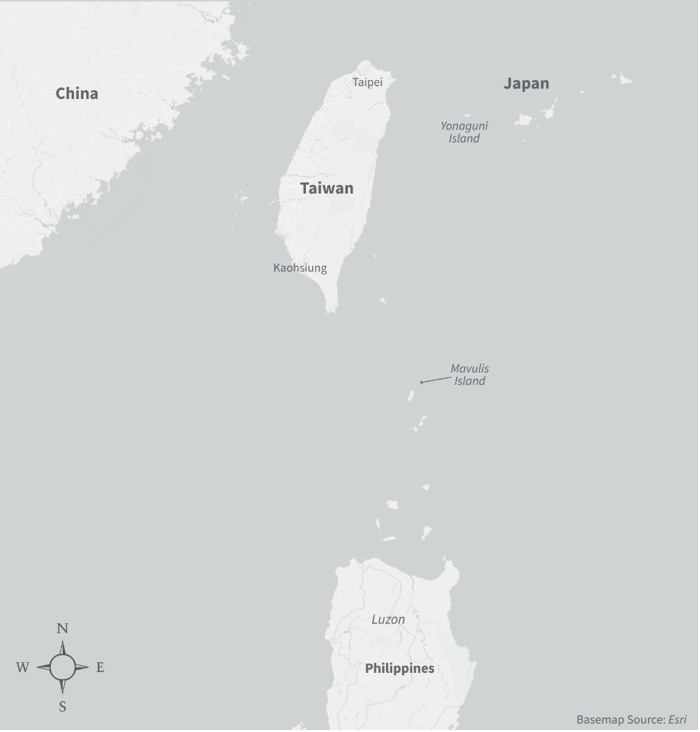
Map showing Taiwan, neighboring countries, and islands. Source: Esri.
Building a Multilateral Task Force
A multilateral naval task force would broaden the array of assets available to protect merchant shipping while reducing the burden on the United States, whose leadership would be essential. In the case of Taiwan, bringing together such a task force would be challenging given the trade relationships between China and various American partners, yet Washington has several natural partners. Tokyo has a vested strategic interest in making sure Taiwan remains accessible. It would likely view any effort by Beijing to prevent LNG shipments entering Taiwanese ports as setting a precedent that would threaten Japan’s energy lifelines. Meanwhile, Australia is the largest supplier of LNG to both China and Taiwan.45 In a crisis, Australia’s ability to continue supplying Taiwan would depend on the security of maritime transit routes, particularly in the South China Sea and Taiwan Strait. As a close ally of Washington, Canberra would likely support efforts to secure LNG shipments to Taiwan, although its extensive trade with China would create countervailing pressure. Thus, Washington and Taipei might need to consider alternative sources of LNG or strategic stockpiling measures.
Whether European partners would participate in such an operation would be determined by their calculus regarding the benefits of protecting global trade versus potential damage to bilateral relations with Beijing. Distance is also a factor, particularly if Europe is still facing a proximate threat from Russia. That being said, European nations could divert their military vessels already in the Middle East and the Indian Ocean. If the threat includes CCG and militia vessels, France and the United Kingdom could also use the patrol vessels they have permanently stationed in the Indo-Pacific.
Policy Recommendations
Preparation to defend against China’s gray-aggression should begin now. Public discussions of the threat can have a deterrent effect, signaling to China that the United States and its allies and partners are preparing to resist interdiction efforts. It is also essential to initiate long-term investments in the infrastructure, strategic partnerships, and mobile energy solutions critical to strengthening Taiwan’s ability to withstand disruptions.46 The less confidence China has in the success of a disruption campaign, the less likely it is to challenge the freedom of navigation.
Establish Maritime Escort Capabilities
- Announce Contingency Planning: Washington should begin planning for the reflagging or escort of commercial vessels supplying Taiwan and discuss this planning publicly. In the 1980s, the mere announcement of U.S. involvement in escorting reflagged Kuwaiti tankers had an immediate impact on Iranian decision-making. Tangible plans would signal U.S. intent and credibility to the maritime shipping industry, to potential partners, and to Beijing.
- Conduct Counter Blockade/Quarantine Exercises: The United States should begin conducting unilateral naval and air exercises focused on escorting commercial shipping near Taiwan to develop and demonstrate operational readiness. These should be followed by bilateral U.S.-Taiwan drills, building Taiwan’s capacity to coordinate in a contested maritime environment while reinforcing political signaling.
- Incorporate Allies Into Exercises: Over time, the United States should incorporate key regional partners, such as Japan, Australia, and the Philippines, into its exercises. Washington should also seek commitments from European partners that have expertise in maritime security and merchant navy coordination operations, as a show of multinational solidarity. Working with European partners could also help the United States access their links to commercial shipping. The visibility of exercises could also have a deterrent effect.
- Clarify the Legal Justification for Action: The United States should clarify that it reserves the right, unilaterally or with allies, to ensure the free flow of energy throughout the world for humanitarian purposes. Without altering the “One China Policy” or clarifying the U.S. view of Taiwan’s sovereignty, such a statement would make clear that, regardless of the CCP’s justification for acting to cut off Taiwan, the United States would have grounds to intervene. Furthermore, the statement would put pressure on allied nations to issue similar declarations, extending the deterrent effect.
- Establish Maritime Corridors: The United States and Taiwan should work with Japan and the Philippines to preemptively establish a maritime corridor through their EEZs or TTWs that could be activated in the event of a blockade, embargo, quarantine, or other attempts to interfere with trade. The United States and other willing allies should then plan to establish a naval presence and convoy merchant vessels in the final miles.
- Establish a Naval and Maritime Security Coordination Structure: The United States and Taiwan should establish a naval and maritime security coordination structure for the future. It would act as a clearinghouse for international missions responding to Chinese actions. The structure would lie dormant until necessary, except during exercises. The United States and its allies should ensure the body includes major military actors, regional naval and coast guard forces, as well as commercial shipping representatives and possibly private military security companies.
- Establish a Trusted Shipping Information Center: Washington and Taipei should establish a center that could provide routing and security advice to merchant shipping in a crisis. This is something commercial seafarers will gravitate toward in an emergency and is a capacity China lacks. Establishing the center now could ensure it becomes the authoritative voice in the event of a crisis. The United States and Taiwan should draw on the extensive expertise of the United Kingdom, Europe, and others to help establish an effective center.
- Consider a Role for Embarked Western Maritime PMSCs: The United States, along with Taiwan, should consult with its European allies and partners, shipping firms, and PMSCs to discuss whether embarked PMSCs could dissuade the PLA-N or CCG from interfering with merchant traffic bound for Taiwan.
Increase Taiwan’s Energy and Maritime Resilience
- Increase Taiwan’s LNG Storage Capacity: Taipei should rapidly expand underground storage facilities for LNG, comparable to those for coal, which are sufficient for 39 days at normal usage rates. This would provide greater time for Taiwan and its partners to coordinate a response to China’s gray-zone activities. Taiwan should also invest in mobile energy solutions like FSRUs, preferably on its east coast, to provide a stopgap in case China targets the fixed LNG terminals on the island’s west coast. Several U.S. companies own FSRUs, whose deployment would imply Washington’s backing. Lastly, Taiwan should explore using power ships — essentially ships that function as power plants — as emergency backup for electricity generation.
- Diversify Taiwan’s LNG Supply: Importing American LNG can reduce reliance on Qatar. Taiwan’s state-owned energy company, CPC, should increase its U.S. LNG purchases — even beyond immediate demand — using a model that enables flexible resale and strategic excess. Ramping up near-term volumes from existing U.S. exporters could ensure immediate diversification ahead of any crisis. Publicly committing to binding offtake and equity terms with Alaska LNG would reinforce this strategy and shift dependence away from fickle partners like Qatar. CPC could also pursue upstream U.S. joint ventures to deepen ties, mirroring investment structures already familiar to the market.
- Acquire LNG Tankers: Taipei should move quickly to procure its own LNG tankers — either through newbuild slots or secondary market purchases. Buying vessels now allows reflagging later if needed. While more than 300 new LNG carriers are under construction, more than 80 percent are already committed under long-term charters. The secondhand market may provide faster delivery, although prices for these hulls are also rising.47
- Enhance Australia’s Leadership Role: Given its vast natural gas resources and established infrastructure, Australia is well-positioned as a local partner to lead a coalition of nations committed to ensuring stable energy flows to Indo-Pacific partners. The United States, Japan, and other regional allies could work with Australia to develop contingency plans for maintaining LNG shipments to Taiwan amid a crisis. This would serve Taiwan while strengthening the broader energy security framework in the Indo-Pacific.
- Explore Potential of Alaskan LNG: To increase its own resilience, Japan may invest in a proposed Alaska LNG export project.48 Shipping routes from Alaska provide a safer alternative to those that cross the South China Sea or Taiwan Strait. Additional exports would also strengthen Washington’s interest in Indo-Pacific energy security. While Japanese firms have approached the Alaska project cautiously due to economic and viability concerns,49 its success could encourage U.S.-Japan-Taiwan infrastructure cooperation, emergency planning, and even joint protection of maritime supply chains that could draw in other energy-dependent allies like South Korea.
- Establish a Regional Strategic Reserve and Storage Hubs: Japan, Australia, South Korea, and Singapore already maintain extensive strategic reserves of petroleum and LNG and could agree to allocate a portion of their stockpiles for shipment to Taiwan in a crisis. The United States could provide logistical support for these shipments and backfill the supply at a discounted rate. Precedent for this arrangement exists between Japan and several state-owned Middle Eastern oil companies.50
- Push for Taiwan’s Inclusion in the Organization (IMO): Beijing’s diplomatic pressure has prevented Taiwan from joining the IMO despite its adherence to IMO standards. Taiwanese shipping companies, however, are members of other international shipping industry organizations. The U.S. government should work with allies to secure IMO membership for Taiwan. This would ensure Taiwan’s voice is heard on a range of issues, including but not limited to Beijing’s dangerous maritime behavior.
- Engage Global Shipping and Insurance Industry Stakeholders: The United States and its partners should also develop joint policy and market mechanisms that ensure continuity of insurance coverage in a crisis. There is precedent for this approach in Japan, where the private sector engaged government after the start of Russia’s war against Ukraine to ensure war risk and insurance coverage would continue where the private sector could no longer provide it.51 Taiwan should establish a similar framework now to reduce uncertainty and blunt CCP efforts to manipulate supply chains through insurance and legal ambiguity.
Conclusion
Taiwan’s LNG vulnerability represents one of the most significant weaknesses that China would likely exploit in a future crisis. But Taiwan, with U.S. and allied support, can take measures that increase its resilience to any Chinese effort to strangle its energy supply, changing the cost-benefit calculus for Beijing.
First and foremost, Taiwan needs to strengthen its internal energy infrastructure, rapidly expanding its capacity to maintain underground reserves of LNG, while investing in floating units as alternatives to fixed LNG terminals. Taipei should also begin purchasing LNG tankers and diversifying its sources of supply. Meanwhile, regional energy security partnerships can secure agreements with partners like Japan and Australia to create emergency LNG reserves.
The United States also has a critical role to play. With its allies and partners, it can initiate planning and conduct exercises that prepare its forces to conduct reflagging and escort/convoy operations and establish maritime security corridors. By incorporating allies and partners into its efforts, Washington can lessen the burden it needs to bear. Outreach to the global shipping and insurance industries, as well as preparing to coordinate with merchant ships in the event of Chinese action, will also be critical.
Both halves of this agenda are essential. Greater Taiwanese resilience will lessen the island’s vulnerability, while a U.S.-led maritime security coalition can blunt the impact of Chinese intervention. Together, these measures represent the best available means of deterring Beijing by sharply reducing the odds that its efforts would be successful.
