November 17, 2025 | Memo
Chinese Coercion of Taiwan’s Energy Lifelines: A Contest Taiwan and the West Can’t Afford to Lose
November 17, 2025 | Memo
Chinese Coercion of Taiwan’s Energy Lifelines: A Contest Taiwan and the West Can’t Afford to Lose
Executive Summary
China is preparing for a conflict it hopes never to fight — by slowly engineering the conditions for Taiwan’s total capitulation. Central to that strategy is energy coercion: the use of economic, legal, and cyber levers to throttle Taiwan’s fuel supply and fracture its political will. Rather than launch a sudden maritime blockade or kinetic invasion, Beijing is more likely to pursue a subtler campaign, one that begins with administrative actions and regulatory pressure, such as Coast Guard inspections disguised as routine maritime enforcement.
By design, and consistent with Beijing’s pattern of gray-zone coercion, these initial moves will likely be legally ambiguous, publicly restrained, and strategically deniable. The intended effect is to paralyze Taiwan before it can respond while sowing division among Taipei’s partners. From there, China will likely escalate incrementally — amplifying economic disruption through disinformation, intelligence-enabled targeting, and persistent cyber intrusions — before potentially turning to selective maritime interference that slows or reroutes Taiwan-bound energy shipments. China’s goal is exhaustion, not escalation: a gray-zone siege calibrated to degrade Taiwan’s resilience and coerce strategic surrender under the veneer of legality.
This summer, the Foundation for Defense of Democracies (FDD) and the Taipei-based Centre for Innovative Democracy and Sustainability (CIDS) at National Chengchi University conducted a tabletop exercise to examine this exact energy contingency, testing how the Chinese Communist Party (CCP) might escalate from diplomatic and economic pressure to an actual quarantine, interrupting and potentially blocking Taiwan’s energy imports. Each phase of the game explored responses to an ever-evolving Chinese cyber-enabled economic warfare (CEEW) campaign against Taiwan.
The exercise, dubbed “Energy Siege,” consisted of three scenarios. The first established a baseline level of cyber and administrative actions that quietly transitioned into a shadow energy quarantine. The second scenario, set as a direct escalation from the first move, examined a prolonged quarantine targeting Taiwan’s energy systems. The final scenario explored what might happen to global trade and security in the Indo-Pacific if the United States and its G7 allies did not immediately intervene to counter Beijing’s aggression. This report explores each scenario, the players’ responses, and the key findings from the discussions.
Beijing believes pressure plus patience will eventually produce political collapse in Taiwan, but it is Taipei’s resilience, not its resistance, that most unnerves the CCP. Time is the test: if Taiwan can withstand the initial pressure, preemptively strengthen its energy partnerships, and avoid being baited into rash moves, Beijing’s advantages erode.
A successful effort by China to squeeze Taiwan’s liquid natural gas (LNG) supply to a trickle will lead to a 50 percent reduction in Taiwan’s electrical grid capacity. This will eventually lead Taiwan’s leadership to a “Sophie’s Choice” — provide power to its public health and safety systems, such as hospitals, schools, and homes, or power its industrial capacity, such as chip manufacturers like TSMC and UMC, and hundreds of associated supply chain companies. The choice to slowly shutter industrial capacity would eventually make Taiwan’s conundrum a global catastrophe when a plurality of the world’s supply of legacy chips and a supermajority of its advanced chips cease flowing.
Indeed, the exercise revealed that while Taiwan must urgently address its own energy and societal vulnerabilities, actions by the United States, Japan, Australia, and European partners can have a significant strategic impact on Beijing’s calculus. While not every partner needs to do the same thing, each must do something: provide economic support, bolster energy diversification, support technical redundancy, or signal a willingness to protect maritime transportation. Success depends on coordinated efforts to support deterrence and complicate Beijing’s strategic calculus — not just from Taipei and Washington but from Tokyo, Canberra, and Brussels as well.
Taiwan’s Energy Vulnerabilities
Subjugating Taiwan remains a core objective for Chinese leader Xi Jinping — a defining test of the CCP’s legitimacy, a cornerstone of Xi’s ambition to rejuvenate the Chinese nation, and a marker of Xi’s personal legacy.
This framing fundamentally shapes the CCP’s efforts to control the island, a lesson clearly articulated by a previous tabletop exercise conducted last year by FDD and the Taiwan Academy of Banking and Finance.1 In the real world, as in that game, China desires not to rely on force but rather on friction to bend Taipei to its will, producing conditions on the ground that will ultimately lead to capitulation without causing an all-out conflict.
Taiwan imports roughly 98 percent of its energy, making it one of the world’s most energy-insecure economies. Almost half of all of Taiwan’s electricity is generated from LNG, and another 30 percent from coal, both of which are imported. Taiwan can only store a limited amount of these fuels — a few months’ worth of coal and only a few weeks’ worth of LNG2 — limiting Taipei’s capacity to stockpile supplies in the event of a crisis.3
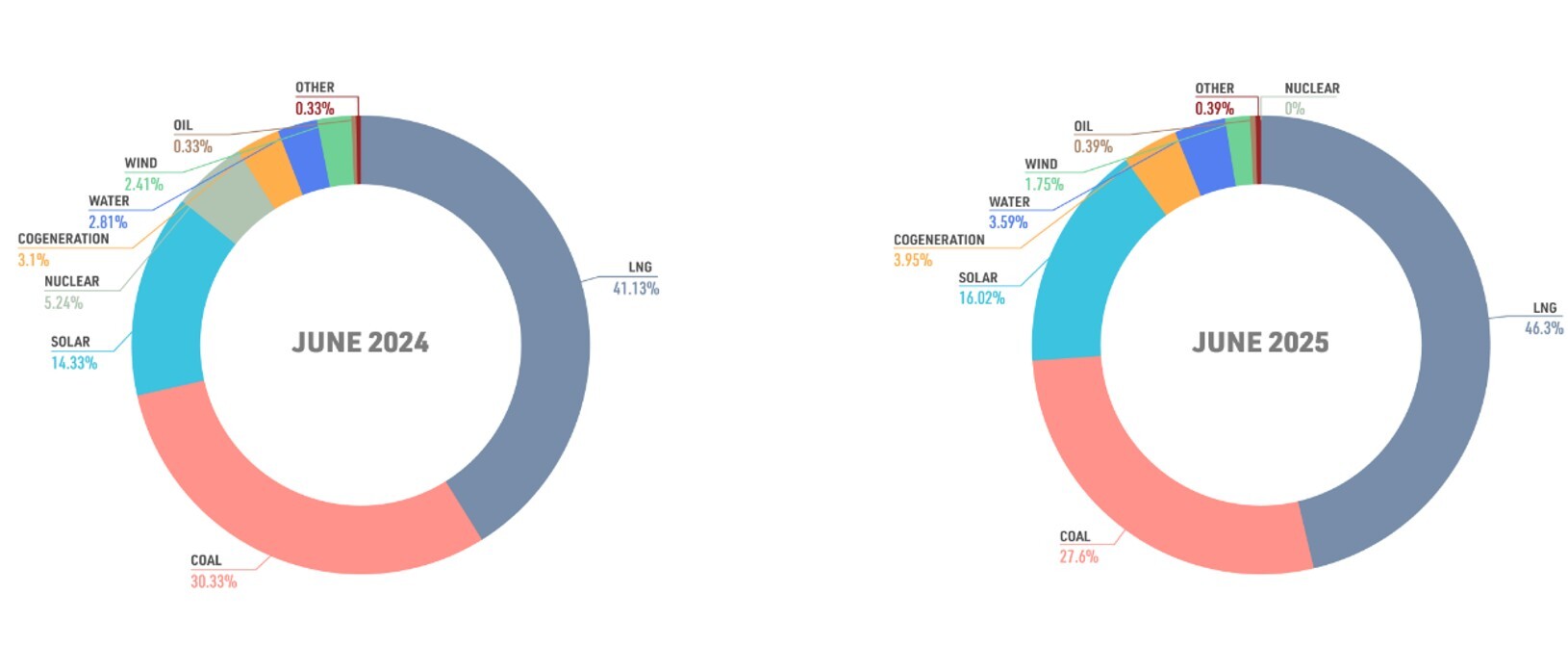
Graph depicting Taiwan’s electricity generation by fuel type. Source: data derived from Taipower’s publicly available information.
Taiwan’s three main LNG terminals and the Taichung coal offloading port are clustered along the island’s west coast, within range of the CCP’s missiles, as shipments are funneled through narrow Taiwan Strait lanes. Through consistent exercises, the People’s Liberation Army (PLA) has increasingly normalized military simulations of blockades and coercive maritime operations in the Taiwan Strait aimed at disrupting commercial traffic and asserting control over critical sea lanes. While the PLA’s rapidly expanding maritime capacity does not yet equate to a proven ability to sustain a quarantine or blockade, Beijing learns quickly and adapts. Even limited confusion or intermittent shipping delays could place significant strain on Taiwan’s electric grid and, by extension, its political decision-making.
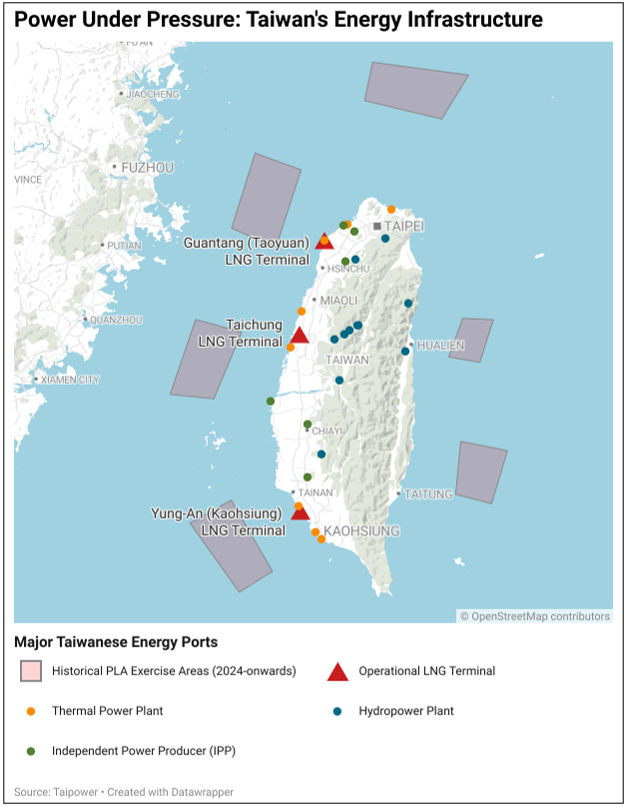
Map showing notable energy infrastructure in Taiwan. Source: data derived from Taipower.
Meanwhile, the CCP has ramped up cyberattacks against Taiwan’s energy grid. In 2024, Taiwan’s National Security Bureau reported that successful cyber-intrusions had doubled year over year.4 Beijing is embedding itself in energy sector technology supply chains and targeting LNG terminal logistics to choke fuel offloading and storage operations. This transition from access to pre-positioning disruptive capabilities mirrors broader Chinese campaigns like Volt Typhoon and Salt Typhoon, where persistent footholds evolve into forward-deployed leverage — signaling that cyber-enabled disruption is now a baseline.
All told, Taiwan’s concentrated energy import dependency and generational distribution amplify Taiwan’s exposure to maritime coercion, supply-chain disruptions, and cyber intrusions — setting the stage for the scenarios in the tabletop exercise.
Game Design
Energy Siege is the second in a series of think tank events designed to analyze Chinese options short of war. The game had five teams: China, Taiwan, the United States, Japan, and international partners, representing Australia, the United Kingdom, and the European Union. The game included three scenarios: Perimeter Lock, Resolute Surge, and The Precipice. The first scenario explored the possibility of a Chinese CEEW campaign; the second and third scenarios occurred in the aftermath of the first, modeling explicit U.S.-led military intervention and inaction, respectively. At the start of each of the game’s three scenarios, the non-China teams assessed the situation by analyzing additional coercive options Beijing might employ, ranking each option in terms of five categories: coercion, vulnerability, resiliency, political pressure, and spillover risk. The players then shared their individual findings to determine where they converged and diverged. Each team then selected the three most likely coercive options China would employ next to pressure Taiwan.
Then, the China team announced its actions, after which the remaining teams crafted three crisis response options, analyzing how long the policy option would take (hours, days, months); the required logistics and how resource-intensive the action would be; and the degree of allied coordination required to execute the option. They then assessed how likely the option was to deter further Chinese escalation and if their respective publics would likely view it as legitimate or not.
Scenario 1: Perimeter Lock
The Perimeter Lock scenario established a baseline of how gray-zone activity and CEEW could escalate in the near future. In this scenario, Chinese administrative actions targeting major LNG suppliers and large-scale military exercises transitioned into a shadow energy quarantine that combined rotating patrols of China Coast Guard vessels with political messaging to deter Taiwan’s allies and partners from intervening.
The China team pursued a strategy designed to normalize its encirclement of Taiwan, sow confusion, and condition stakeholders to respond passively. In lieu of a single decisive blow, the China team saw the greatest advantage in a slow, deliberate constriction of space, confidence, and options. The objective was to undermine Taiwan’s will to resist, fracture its internal cohesion, and increase the cost of external support without ever tripping Washington’s redlines. This approach was intended to be legally ambiguous, publicly restrained, and strategically deniable. (See Table 1 for a list of the China team’s actions.)
For Beijing, disinformation is not a sideshow but rather its primary weapon, wielded to control the narrative and sap its adversaries’ will. Building on this approach, the China team deployed a calibrated campaign to make Taiwanese citizens quietly question the competence of their government, the reliability of their energy systems, and the credibility of allied support. At the same time, China used backchannel influence to pressure Qatari officials into rethinking their LNG delivery schedule to Taiwan and deployed an extended CEEW campaign focused on maintaining persistent access to energy sector industrial control systems.
Table 1: China’s Moves During Perimeter Lock
| Strategic Framing: China sought to condition Taiwan and its partners through calibrated, reversible actions, favoring disinformation, proxy energy pressure, and cyber pre-positioning to sap confidence. The aim was to create facts on the water and force others to live with them, a gray-zone campaign designed as a slow boil: legal in tone, reversible in form, and paralyzing in effect. |
| Disinformation
Target the Taiwanese Government: Propagate narratives through a range of media channels, attacking the Taiwanese government, particularly the Lai administration’s ability to manage crises. Promote Public Fatigue: Introduce rumors of blackouts and energy rationing, allegations of military fuel hoarding, and suggestions that grocery chains are quietly preparing for extended power outages. Introduce Doubt Over Allied Commitment: Erode public trust in the strength and timeliness of U.S., Japanese, and Australian commitments. |
| Energy Pressure by Proxy
Exploit Flexibility in Qatari LNG Contracts: Quietly convince Qatar, a major supplier, to reallocate or delay select LNG cargoes to Taiwan under benign pretexts, leveraging China’s long-term purchase agreements and its broader economic sway. Introduce Ambiguity Into Australia-Taiwan-China Relations: Force Canberra to weigh the calculation of continuing to send LNG to Taiwan against the possibility of disrupting trade normalization with China. Allow Free Flow of Energy to Regional Players: Allow LNG to flow freely to Japan and other regional players, signaling that non-interference will guarantee supply chain continuity. |
| Cyber Pre-positioning
Attack Grid Control Systems: Target Taiwan’s industrial control systems by introducing misconfigurations, alert triggers, and system lags, creating doubt over the safety and security of the island’s energy infrastructure. |
To counter coercion without feeding Beijing’s escalation narrative, Taiwan sought to shape perceptions, reinforce alliances, and keep key international actors engaged before gray-zone pressure metastasized into crisis.
During the scenario, the Taiwan team countered Beijing’s disinformation campaigns with active counter-messaging, rapid fact-checking, and selective signaling to key customers that persistent Chinese gray-zone activity could cause computer chip shortages. Taiwan energy team players activated contingency plans to draw from alternative LNG suppliers in Australia, the United States, and Southeast Asia, while relying on private-sector buyers to enforce Qatari contracts. Taiwan energy team players, in coordination with the Taiwanese military, recommended stationing personnel at key electrical substations for rapid manual override if China successfully hacked the system, and military-civilian cyber coordination.
The U.S. team took a deliberately subdued approach, prioritizing economic approaches over military deployments. The team envisioned establishing a direct line between Taipei and major U.S. LNG exporters to support the larger trade agenda and help Washington negotiate energy deals. Even if this caused a delay in LNG shipments due to contract negotiations or stumbles within the spot market, Washington considered it a win.
The U.S. team also discussed how this scenario put a premium on Taiwan increasing its energy storage capacity as well as its strategic investments in the United States, likely to include expanding its current commitment to Alaska’s LNG infrastructure. It could also include expanding semiconductor manufacturing facilities in America, signaling deeper U.S.-Taiwan business relations.
Tokyo’s place in global LNG markets, as well as its stockpile of LNG, shaped its response, as well as its desire to focus on energy security. For Japan, energy security meant the consistent delivery of long-term LNG contracts to Taiwan under original delivery terms rather than delivery terms impacted by political pressure.
The Japanese team discussed a strong public statement backing the Taiwanese government and precautionary messaging to protect its own public from misinformation. The Japanese team also recommended quiet coordination with G7 countries and aligned allies and partners on a potential impact assessment for sanctions on China as a contingency, should Beijing escalate further.
The international partners team took independent actions. The United Kingdom coordinated with key states like Qatar behind the scenes but waited for other states to speak up first. Australia issued statements against Chinese pressure on Qatar but stopped short of filling the LNG gap. The European Union focused on upholding norms but stopped short of issuing sanctions. Collectively, these states observed, assessed, and signaled diplomatically but otherwise did not directly intervene.
Analysis: The World Waits as Taiwan Fights Alone
From Beijing’s perspective, no response directly challenged its actions. It could even frame Taiwan’s outreach to U.S. firms about chip shortages as “economic hostage-taking,” potentially straining Taipei’s image as a consistent and dependable actor in global supply chains. The China team judged its strategy as low-risk and sustainable: Taiwan absorbed pressure, the United States turned the moment into leverage against Taiwan, and other allies limited themselves to muted diplomatic gestures.
Taiwan’s strategy was reinforced by a deliberate diplomatic framework that leveraged existing mechanisms rather than waiting to build them mid-crisis. This approach had two major lines of effort. First, the team described how Taiwan’s National Security Council and Ministry of Foreign Affairs would activate backchannel coordination with Japan and the Philippines — two critical regional stakeholders — to ensure aligned messaging. Second, the team prepared talking points and legal justifications in case Taiwan needed to bring gray-zone coercion to the attention of major multilateral bodies and international organizations. The intent was to use diplomacy to degrade the PRC’s need to frame its activities as legitimate. This strategy highlights that the real battleground is not just in the Strait, the grid, or the airwaves: it is also in the minds of decision-makers in Washington, Tokyo, Canberra, and other democracies.
The U.S. team, modeling a Trump-style administration, took a minimalist view of the crisis. The only serious point of engagement was the Qatar LNG issue — but Washington viewed it as an opportunity rather than a threat. Washington offered to backfill LNG supplies with American shipments but only in exchange for long-term benefits such as Taiwanese investments into U.S. strategic sectors. Participants agreed this backfill could be arranged within 24 to 72 hours via spot-market diversions, giving the president deal-making leverage. Yet the group also recognized that spot markets were no substitute for deeper storage and redundancy — strategic depth that the U.S. team did not prioritize in this move.
The U.S. team also favored measures to reduce Taiwan’s vulnerability to energy coercion. They almost unanimously saw a need to increase energy production and stabilize the grid. Multiple players noted that small modular reactors (SMRs) would be ideal to help Taiwan create energy resilience in the future. However, as Taiwanese players noted that the scenario was set in August 2025, when no nuclear reactors were operating in Taiwan, the discussion did not account for the potential vulnerabilities nuclear facilities might face in isolation, including cyberattacks, disinformation campaigns, and disruptions to external transmission lines. Moreover, Taiwanese players emphasized the need to evaluate the security risks associated with operating nuclear plants during crises, along with complying with the government’s prerequisites for reconsidering nuclear power — ensuring safety, resolving waste management, and achieving social consensus. In the meantime, however, Taipei could explore options to improve efficiency and voltage regulation on the grid. Taiwan could also use formal diplomatic agreements with the United States, Japan, and possibly South Korea to ensure access to LNG shipping, storage, and regasification in the event of a crisis.
Japan’s role was the most multidimensional. Tokyo signaled readiness to possibly share LNG from its surplus capacity and to publicly reinforce Taiwan’s energy resilience narrative. It urged G7 partners to prepare a sanctions framework should Beijing escalate, framing contract sanctity and energy infrastructure as pillars of modern deterrence. Japan also highlighted that Chinese pressure on Qatar could be cast as a breach of international commercial law — an angle it believed would resonate globally. At the same time, Japanese officials noted constraints on LNG storage for both Japan and Taiwan, underlining the need for upstream diversification. While Japan avoided military commitments, it positioned itself as a legal and logistical broker if the crisis deepened.
Australia favored leaking intelligence about a potential Qatar-China LNG arrangement and issuing a public defense of market integrity. The European Union anticipated issuing a low-level, values-driven statement within a week, hampered by its August recess and consensus model. The United Kingdom preferred quiet coordination — sharing intelligence, sounding out Qatar privately, and releasing public statements until Doha’s position was clear. Across these capitals, the responses were consistent in one respect: none directly addressed China.
Several dilemmas emerged from the discussion. Qatar’s decision was seen as pivotal — if Qatar upheld contractual delivery with G7 backing, Beijing’s pressure would falter. But if Qatar bent the knee and no one filled the gap, China would secure a strategic win without escalation. Taiwan’s tactic of hinting at chip shipment delays could spur U.S. engagement but risked undermining its reputation as a reliable supplier. U.S. LNG supply, while fast, would come with strings that could reshape Taiwan’s foreign direct investment flows for years. Some participants flagged the need for larger LNG storage, pre-negotiated diversion agreements, LNG-sharing arrangements, and deployment of technologies like SMRs or synchronous condensers.
Scenario 2: Resolute Surge
The Resolute Surge scenario unfolded in the immediate aftermath of Perimeter Lock. Emboldened by the muted international response to its initial moves, China signaled it would escalate to a prolonged energy quarantine short of war. The scenario then assumed a more forceful U.S. intervention. While Perimeter Lock explored a gradual shift toward gray-zone coercion, Resolute Surge forced players to grapple with a more overt and sustained confrontation. The assumption driving this phase was not that escalation was inevitable but rather that having faced little early resistance, Beijing might gamble that bolder moves would go similarly unchallenged.
As Washington showed itself to be more assertive, Beijing adjusted its approach not because it wanted to but because it felt it must save face while avoiding appearing reactive in the wake of Taiwanese and international defiance. What’s more, with the United States signaling plans to deploy naval forces and coordinate with allies, the China team assessed that the crisis was no longer merely a bilateral pressure campaign but a broader struggle among great powers. It had become a contest of systems, a test of endurance, and a fight over escalation control.
With the stakes elevated by U.S. intervention, Beijing prioritized prudence and ambiguity, turning to layered pressure instead of overt escalation. Importantly, even as Beijing bristled at outside involvement, it did not treat the crisis as having crossed into full-scale war. Instead, to the extent possible, the China team pursued a path of strategic erosion, seeking to gradually undermine Taiwan’s resilience through calibrated, often deniable actions. (See Table 2 for a full list.)
Beijing deployed targeted cyber operations to disrupt critical energy distribution nodes and sow psychological distress, weakening public trust in the government’s ability to manage the crisis. In parallel, the team launched a sustained information campaign aimed at stoking division within the United States, seeding doubt about the purpose, duration, and end-state of U.S. involvement. It also issued quiet threats to global firms, warning that support for U.S. military operations could result in blacklisting, restricted access to Chinese markets, or delayed regulatory approvals.
Table 2: China’s Moves During Resolute Surge
| Strategic Framing: Beijing saw no need to fight the U.S. Navy directly, nor did it seek to win in a single blow, but rather to grind down resolve. The aim was exhaustion, not escalation, making convoy operations politically costly and economically unsustainable. |
| Cyber-Enabled Societal Disruption
Energy Infrastructure: Disrupt LNG offload schedules and hinder internal fuel routing, causing disruptions to societal continuity by producing localized energy disruptions. Societal Infrastructure: Disrupt ATMs, force school and hospital closures, interrupt metro signaling systems to cause delays, and target grocery point-of-sale terminals to generate public despair and weaken morale. Disinformation: Promote narratives to assign blame to Taipei’s leadership by alleging hoarding by elites, inept grid management, and a failure to plan despite “warnings.” |
| Strategic Disinformation Targeting the U.S. Debate
U.S. Political Debate: Introduce a coordinated campaign to seed questions across U.S. online ecosystems designed to wear down the American public’s commitment to continued convoy operations. Taiwan-U.S. Relationship: Produce doubt among Taiwan’s political leadership and the Taiwanese public over whether the United States will remain committed to protecting energy shipments. |
| Commercial Disruption of Shippers and Insurers
Regulatory Action: Offer quiet, deniable warnings signaling that supporting U.S.-escorted runs could invite blacklisting, lead to restricted access to Chinese ports and markets, or slow-roll regulatory reviews. Corporate Outreach: Introduce narratives positioning firms participating in U.S. operations as complicit in “dangerous provocations,” militarizing the strait, and undermining regional stability. |
In turn, Taipei shifted from resilience to crisis management as an undeclared maritime quarantine pushed LNG stocks toward exhaustion. Authorities asked Taiwan energy team players to cut electricity generation by half, prioritizing households and essential services, suspended most industrial load to buy (albeit minimal) time, dispatched Taiwan-flagged coal carriers to resupply the island, and moved to diversify insurance backed by state guarantees. Taiwanese players coordinated coast guard escorts and engaged in steady public communication while preparing limited emergency authorities, tightened semiconductor exports to China, and surged cyber support across critical sectors.
Washington shifted to a limited maritime-based intervention posture, establishing a Joint Maritime Energy Corridor anchored by U.S. naval assets and supported by contributions from Japan and Australia. The concept included escorted transits of LNG tankers from rendezvous points to Taiwanese ports, selective reflagging of commercial vessels to extend protections, and insurance liquidity for LNG carriers in coordination with domestic and allied underwriters and reinsurers.
In parallel, Washington applied a commercial toolkit to raise costs on Beijing’s enablers. The Treasury Department and Commerce Department began to identify Chinese commercial assets in the United States for contingent freezing while using backchannel messages to warn Beijing that further escalation could trigger exclusion from U.S. capital markets or new limits on components such as engine parts for wide-body aircraft.
The Japan team discussed creating a formal coordination mechanism with the United States, Australia, the Philippines, South Korea, and Taiwan that covered sanctions planning, energy supply-chain security, maritime law, information sharing, disinformation management, and crisis communications.
The Japan team authorized limited naval and air deployments under its Important Influence Situations and Maritime Security Operations authorities, positioning destroyers near Okinawa and tasking patrol aircraft to watch the northern and, where feasible, the southern approaches. Japan offered material and, when necessary, logistical support to U.S. forces, including for coalition vessels and potential non-combatant evacuations.
Once the United States announced sustained naval escorts, the international team began discussions on a rotational multinational maritime task force, with a proposed minimum duration of six months and staggered contributions. The United Kingdom moved ahead with intelligence sharing and forward planning. France, Germany, and Italy considered deploying up to six vessels in aggregate, including backfill roles in adjacent theaters. Australia weighed committing two assets to corridor work while maintaining normal commercial relations with Beijing. India indicated an interest in protecting its own shipping on an independent basis rather than integrating formally into a U.S.-led structure.
The European Commission weighed sanctions on Chinese-owned port assets and tariff adjustments for Chinese shipping lines. Major European shipping centers — Rotterdam, Hamburg, Antwerp, and London — started working to exclude Chinese-linked insurers and financiers from key consortia, to reassess China’s investments in critical logistics nodes, and to tighten port access or increase scrutiny.
Analysis: Tensions Ratchet Up, but the Cavalry Rides In
The Taiwan team confirmed that industry curtailments — including in the semiconductor sector — were survival measures, anticipating that energy team players would be preparing to shut export-oriented operations by day 7 to conserve fuel and stabilize the grid. Representatives from the semiconductor industry highlighted the longer-term costs and risks of reducing power. Taiwan energy team players described a likely load-balancing plan and expedited coal options, even as other players warned that “sacrificing the engine to keep the lights on” could undermine investor confidence and public morale. Cyber defense partnerships were active, but offensive and deterrent capacity remained thin due to a lack of capability in Taiwan. Some observers nonetheless worried that these measures validated Chinese pressure and might erode allied stamina over time.
Diplomatically, participants expected the real turning point would come if China’s actions or Taiwan’s reactions curtailed semiconductor production. U.S. planners warned that shutting industry, halting exports, and rationing energy was not politically or economically sustainable for Taiwan or its partners.
Planners judged convoy operations feasible and noted that a maritime-based intervention conducted in a timely and forceful manner would complicate and likely derail the CCP energy coercion campaign but flagged several thresholds. Collisions could occur given close PLA maneuvers. Rules of engagement would likely hold that U.S. forces would not fire first, but any collision would be diplomatically and operationally volatile.
Cyber retaliation against a strained Taiwanese grid remained a concern, prompting an elevated posture at U.S. Cyber Command but no plans for kinetic response.
The international team emphasized humanitarian framing and commercial deterrence but showed limited appetite for sustained kinetic roles. Statements focused on the human impact rather than sovereignty disputes. They discussed a rotational multinational maritime task force to provide support to U.S. forces, without formal integration under U.S. command.
During the plenary discussion, the debate returned to three critical questions: 1) How would U.S., Japanese, and Taiwanese forces coordinate without prior exercises or real interoperability? Under current conditions, U.S.-Taiwan naval operations are aspirational. 2) Do the parties have the necessary political will? Convoys require clear commitments from every state reliant on Taiwan’s role in global supply chains. Escorts are inherently military acts and could shift perceptions of who was escalating. 3) Why did none of the parties plan offensive cyber and financial pressure? No team prioritized offensive or coercive cyber options against Chinese command, logistics, or narrative systems. While some players discussed these options, they did not plan these actions with the same rigor as escort operations.
In the closing discussion, participants converged on a few essentials. First, the international team proposed combined convoy and cyber drills with multinational teams and Taiwanese observers as both a capacity builder and a signal of resolve. Second, multiple players reflected on how political will had become the center of gravity, energy infrastructure had become a frontline, and semiconductor output was the likely trigger for wider intervention. Players saw convoy operations as necessary but insufficient without legal, cyber, and commercial tools moving in tandem. There was also concern that the cyber domain remained the most neglected battlespace and that neglect carried rising costs. This was not a crisis to admire; it was a test that Taiwan and its partners would pass or fail in real time as much in cyberspace as on the high seas.
Retired naval observers echoed the need for offensive cyber capacity, a national cloud-based data back-up system off-island, and rehearsals with allies before a crisis makes coordination harder. Taiwan had to balance a national emergency — where capitulation risked its sovereignty — with the domestic turmoil and global economic blowback if shutdowns produced job losses and prolonged rationing impacted critical exports.
Scenario 3: The Precipice
The third scenario, The Precipice, also occurred after Perimeter Lock but presented a future counterfactual. Instead of assuming that the United States intervened and supported convoy operations (Scenario 2: Resolute Surge), this scenario assumed the opposite, with the United States and G7 nations merely issuing a joint statement underscoring that peace and stability in the Taiwan Strait are vital to global trade and security in the Indo-Pacific region.
With the United States publicly ruling out military escort operations, the operating environment shifted significantly in Beijing’s favor. No longer facing an immediate risk of escalation, Beijing ran a calculated campaign of political shaping, psychological attrition, and operational harassment without firing a shot. Beijing sought to undermine confidence in Taiwan’s leadership through low-level disinformation and gray-zone interference in energy flows using militia and regulatory tools. Simultaneously, Beijing sought to preempt coordinated economic retaliation from Taiwanese allies by issuing threats through private channels. (See Table 3 for the China team’s actions.)
Table 3: China’s Moves During The Precipice
| Strategic Framing: While it is not clear China would even need to push this far to achieve its objectives — since the low-level pressure in Scenario 1 alone could have sown doubt and strained Taiwan’s energy system — the absence of meaningful pushback risked emboldening Beijing. In this phase, China pressed further not simply to test the limits of international tolerance but to grind down Taiwan. |
| Cyber Disruption and Disinformation
Energy Logistics: Introduce deniable cyber and physical operations — including ransomware and criminal proxies — to target systems supporting LNG terminals and internal distribution, slowing offloads and straining energy delivery systems. Disinformation: Activate rumor networks amplifying claims of elite hoarding, preferential allocation, and mismanagement inside CPC and Taipower to erode trust in the Lai administration’s competence. |
| Maritime Militia Disruption
Grey Fleet: Direct maritime militia formations toward Taiwan’s LNG and oil terminals to generate congestion, complicate access, and strain Taiwan’s Coast Guard. |
| Economic Coercion Signaling
Sectoral Retaliation: Quietly warn counterparts in Japan, Australia, Canada, and the European Union that alignment with U.S. measures could invite retaliation against their private industries. Regulatory Reviews: Threaten Western firms with regulatory reviews, licensing delays, import denials, and monopoly probes to compel compliance without generating escalatory pressure. Sanctions: Warn that coordinated sanctions campaigns would carry commercial consequences, preempting alignment by raising perceived risk. |
In the absence of allied convoys, Taipei ran a layered maritime plan led by its coast guard with limited naval support, coordinating with the Filipino, Japanese, and U.S. coast guards under the banner of maritime safety and port-access exercises. Taipei authorized its coast guard to maintain safe corridors into Yongan and Taichung, facilitating up to two coal carriers and one LNG vessel per day, with navy ships on standby to assist. If the escorts failed, the government was prepared to impose a 5 percent cut to industrial power — at least — to stretch reserves and activate the emergency natural-gas storage facility at Tiezhen Shan Mountain.
The Taiwanese Presidential Office launched a coordinated domestic response, authorizing industrial power rationing to stabilize the grid while offering daily press conferences to counter disinformation. Taipei called for an emergency Asia-Pacific Economic Cooperation ministerial meeting to promote an institutionalized LNG corridor for the wider Indo-Pacific, while a national cross-party conference sought to reinforce unity and signal cohesion to foreign partners. To manage volatility, the government temporarily closed markets and used foreign-exchange controls to limit conversions between Taiwanese and Chinese currencies. The government team players anticipated that the Taiwan energy team players would also activate the power grid’s emergency management system.
Taiwan’s leadership eventually faced the difficult choice — provide power to its public health and safety systems, such as hospitals, schools, and homes — or power its industrial capacity, such as chip manufacturers like TSMC and UMC, and hundreds of associated supply chain companies. Faced with only unappealing options, any decision by Taipei to slowly shutter industrial capacity would eventually make the island’s conundrum a global crisis when a plurality of the world’s supply of legacy chips and a supermajority of the advanced chips ceased flowing.
Washington issued a joint statement with Japan, South Korea, and the Netherlands, affirming a review of export controls on semiconductor manufacturing equipment destined for China. In parallel, the Commerce Department moved to expand the Foreign Direct Product Rule to further restrict Chinese access to advanced chips and reviewed export approvals for engines used in Chinese commercial airline fleets. On capital markets, the U.S. Securities and Exchange Commission opened an urgent review of Chinese firms’ compliance with audit rules, raising the prospect of delistings, while the Justice and Treasury departments mapped CCP elite assets within U.S. jurisdiction in anticipation of future freezes or seizures.
The president announced that the temporary reprieve on a TikTok ban would not be renewed and signaled pending action on WeChat, RedNote, DeepSeek, and other Chinese platforms under Bureau of Industry and Security authorities. Senior legislators publicized a review of Chinese student visas, including a provisional suspension for CCP-affiliated individuals. Corporate diplomacy also played a part; high-profile defense-tech leaders visited Taiwan with prototypes of autonomous systems.
The United States also entertained policy concepts around emergency reflagging of LNG carriers but stopped short of operational commitments.
The Japanese team continued to highlight the importance of a sustained information campaign highlighting Taiwan’s resilience while signaling Tokyo’s willingness to provide LNG or other fuel support upon request. Japan also proposed a Cross-Strait Maritime Security Fund to underwrite future security operations in the Taiwan Strait, headlined by a commitment of $10 billion to support U.S. Navy logistics, enable search-and-rescue and escort functions, and offset maritime insurance premiums or retrofitting for coalition shipping.
Tokyo increased diplomatic pressure through private and collective channels, warning Beijing that continued coercion undermined the 1972 Japan-China Joint Communiqué, which normalized relations between the two countries. Japan began coordinating with the European Union, Canada, Norway, South Korea, the Philippines, and Australia on potential sanctions packages aimed at Chinese logistics and shipping conglomerates, state-owned port operators, and officials tied to coercive maritime actions.
The European Union opened investigations into Chinese stakes in European ports, focusing on Chinese state-owned shipping giant COSCO’s control of terminals in Rotterdam, Antwerp, and Piraeus, while announcing temporary subsidies for war-risk and kidnap-and-ransom insurance on European-flagged shipping in the Western Pacific.
Five Eyes partners (the United States, the United Kingdom, Canada, Australia, and New Zealand) quietly deployed cyber teams to the island in support of Taiwan’s government and economic networks, concentrating on grid and logistics hardening, disinformation mitigation, and strengthening public trust. In parallel, a flurry of ministerial and senior official visits from the United Kingdom, Germany, Canada, and Australia arrived in Taipei while coordinating a messaging campaign aimed at influencing Washington.
European and U.S.-linked private maritime security companies offered security teams for commercial vessels transiting near Taiwan. UK firms pitched port-perimeter security packages to Taiwan’s transport authorities, combining surveillance, access control, and rapid response. Commercial intelligence providers marketed satellite and UAV reconnaissance to Taiwanese agencies under export-compliant contracts.
Analysis: China Undeterred but Global Economic Maelstrom on Horizon
As the third scenario concluded, all teams faced a shared reality: Beijing had normalized a coercive energy quarantine, the United States had chosen diplomatic pressure over convoy protection, and Taiwan was left managing survival under political, economic, and cyber duress. The session exposed a coalition gravitating toward pressure without presence, deterrence without deployment, and messaging as the main instrument of maneuver.
Seeking to avoid this outcome, participants emphasized the need for a legal and operational push to reflag priority cargoes under accepted international practice. They also focused on measures to enhance the resilience of Taiwan’s grid by rapidly expanding microgrids with additional utility-scale and rooftop solar, ensuring power quality under low-power conditions, and pre-staging diesel generators procured and operated with private-sector partners to bridge localized shortfalls.
Participants noted that a U.S. administration might still pursue a transactional backchannel on providing LNG to maintain chip production that risked sidelining Taipei, even as public rhetoric stressed rules and restraint. Critics warned that Beijing would press for concessions if Washington framed the crisis as a bargaining problem; others argued that the relative salience of each issue, not symmetric leverage, defined the fight.
The facilitator highlighted that Beijing appeared to retain the advantage. Taiwan had entered rationing, U.S. policy centered on regulatory pressure rather than escorts, and allies struggled to operationalize sanctions or security guarantees. China’s likely next steps included formalizing the “quarantine,” nudging Taipei toward a state of emergency to tarnish the government’s competence, exploiting rare-earth and magnet leverage, and persisting with a narrative that Taiwan’s crisis reflected domestic mismanagement rather than external coercion.
Important gaps remained from the perspective of the U.S. team. There was no maritime coordination mechanism and no public plan to reflag or escort commercial shipments, which left Taiwan’s energy access vulnerable to harassment. There was no dedicated energy solution beyond prioritizing U.S. LNG for chip-related manufacturing, leaving broader civilian needs exposed. Despite ransomware and disinformation activity, the United States did not mount or support offensive cyber operations. In fact, Taiwan lacked an indigenous offensive cyber capability that could serve as a deterrent. Most actions in this round were unilateral or ad hoc, with only limited coalition-building where market interests aligned.
Recommendations
During the exercise, the CCP’s reliance on a CEEW campaign, amplified by its influence operations, led Taiwan to face significant societal challenges stemming from energy and economic insecurity — the conditions that China believes will lead to capitulation. By improving the island’s capacity to resist, Taiwan, the United States, and their allies and partners can credibly deter China by raising the costs of any crisis.
Energy Resilience
Taiwan, the United States, and their allies and partners must explore all angles to build resilience and diversify both the sources of Taiwan’s energy imports and its power generation capabilities. This effort will provide a deterrent effect against the CCP by reducing the efficacy of an energy-focused campaign while allowing Taipei to quickly recover from disruptions.
- Diversify LNG Supply Chains: Along with purchasing its own LNG carriers, Taiwan should consider purchasing more LNG from the United States to strengthen both the island’s energy security and political ties between Washington and Taipei. The U.S. government can support Taiwan’s LNG expansion by providing diplomatic, political, and financial support for energy infrastructure projects in Taiwan, designating the island as a beneficiary country pursuant to the European Energy Security and Diversification Act. Taiwan should also strengthen its energy ties with Japan, a major regional LNG importer whose strategic stockpile would allow Tokyo to supply Taipei and cover potential short-term shortfalls in the event a Chinese influence campaign convinced Qatar to curtail shipments.
- Utilize Nuclear Power: Taiwan’s lack of fossil fuels could make it a textbook consumer of nuclear power. This can be achieved through a mix of traditional nuclear power plants and investment in emerging SMR technologies. Taiwan should consider adopting a legislative resolution to restart its nuclear power plants. In a hot conflict over the island, where energy resupply is at best difficult and at worst impossible, redundancies are essential. Taiwan should also be an aggressive investor in SMR opportunities while recognizing that the scale of power that Taiwan needs is not likely to come from SMRs in the next half-decade. Nuclear power will help stabilize Taiwan’s grid — currently one of the most taxed among the Organization for Economic Cooperation and Development (OECD) countries — and offer a consistent source of energy to counter possible CCP efforts to impose an energy shadow quarantine.
- Expand and Diversify Energy Storage Facilities: As the island only has weeks of LNG storage during normal burn rates, Taiwan should invest in expanding LNG storage facilities, including floating LNG regasification barges, along with expanding open-yard coal storage facilities. Taiwan should also work with its regional partners, particularly Japan, Australia, and South Korea, to develop a regional strategic LNG reserve. To accomplish this, the United States can kickstart the process by designating Taiwan eligible for Development Finance Corporation funds for building LNG storage infrastructure alongside Indo-Pacific partners.
- Directly Contract LNG Imports for TSMC: TSMC, Taiwan’s industry-leading semiconductor company, should explore securing long-term U.S. LNG contracts to bolster operational resilience and provide geopolitical signaling. Beyond enhancing energy security, this move would hardwire Taiwan’s semiconductor output to U.S. energy flows, raising the global economic stakes of any disruption and deepening strategic entanglement with the United States. It would also create a clear, market-based demonstration that U.S. LNG supply underpins Taiwan’s most critical industry. This linkage would provide an added layer of commercial and political incentive in Washington to support continuity of that supply chain.
- Preemptive Signaling to Qatar To Preserve Taiwan’s LNG Supply Chains: Washington and its partners should quietly but firmly signal to Doha that entertaining Beijing’s pressure tactics — whether through “temporary adjustments” in LNG deliveries or through regulatory pretexts — would carry costs for Qatar’s broader relationship with the West. The goal is not to punish Doha in advance but rather to narrow China’s menu of coercive options by cutting them off at the start. Clear, early messaging would both reassure Taiwan and reduce Beijing’s confidence that it can manipulate LNG flows through third parties without consequence. The United States should prepare conditional sanctions packages to deter the CCP from placing diplomatic pressure on Qatar or other Taiwanese LNG suppliers, with set thresholds serving as triggers for the Treasury Department to deploy economic actions.
Cyber Resilience
The CCP will likely use cyberattacks to maximize the impact of its other lines of effort while maintaining plausible deniability and escalation control. Taiwan must secure its critical infrastructure, particularly its energy sector, from cyber intrusions while expanding its capacity to induce pressure within Beijing’s decision-making.
- Improve Public-Private Cooperation to Protect Critical Infrastructure: Taiwan should work to improve cooperation between the private and public sectors, particularly in industries such as energy, which straddle overlapping responsibilities. Taipei should establish a whole-of-country understanding of the threat, working with the private sector to construct sector-wide recovery and response plans that build into a national resilience plan, as well as programs to train and exercise with operators for improved mitigation capabilities. Cooperation efforts should also include measures for sharing advisories and rapid threat information and intelligence between the government and industry.
- Consider Building an Indigenous Offensive Cyber Capability: Taiwan must be prepared to deter China in cyberspace, an effort that increasingly calls for Taipei to develop an offensive cyber capability that will force the CCP to reconsider its cyber intrusions. Taipei should turn to the United States and possibly Australia for practical advice on how to use offensive cyber operations, including (but not limited to) how to conduct tabletop exercises and basic operational training, as well as attribution, planning, and targeting techniques.
- Allied Cyber Defense Assistance: Taiwan should consider partnering with the Five Eyes to improve its cyber defense capabilities. This assistance could take the form of bilateral training exercises, law enforcement training, and memorandums of understanding for expanding joint cyber-defense exercises. Taipei should also assess lessons learned by its Indo-Pacific neighbors, for example, by drawing from Australia’s national-level cyber incident response and management plans.
Maritime Resilience
Taiwan and the United States, along with their allies and partners, must be credibly prepared to conduct convoy and escort operations in the event of an energy-focused shadow quarantine. Along with sending a strong signal to the CCP, taking proactive measures will also strengthen ties between Washington and Taipei while offering significant flexibility in the event of a crisis.
- Prioritize Convoy and Escort Planning and Exercises: The U.S. Navy should unilaterally begin planning for the possibility of reflagging vessels bound for Taiwan while practicing convoy operations and escorting commercial shipping as a demonstration of its operational readiness. This will also signal to the CCP that the United States will respond to any effort to conduct a shadow quarantine of Taiwan. These exercises should eventually expand to encompass bilateral U.S.-Taiwanese participation and, eventually, multilateral exercises incorporating regional allies such as Japan, Australia, and the Philippines. The United States should also seek commitments from European allies, particularly those with experience in maritime security and merchant navy coordination operations — strengthening political signaling without appreciably raising escalation risks.
- Include Taiwan in the International Maritime Organization: The United States, along with its allies and partners, should pressure the International Maritime Organization to accept Taiwan as a member, allowing Taipei to engage on global shipping issues, including China’s dangerous maritime behavior. Taiwan’s admission will not only provide the island with additional cooperative security measures in the form of rule-making power but will also clearly communicate the international community’s sensitivity to Beijing’s maritime malfeasance.
- Engage Global Shipping and Insurance Industry Stakeholders: Europe hosts four of the top 10 global shipping companies, placing the continent as an essential pivot in global maritime issues. The United States should engage with major shipping stakeholders, particularly European allies, including the Netherlands, the United Kingdom, and Norway, to draw up policy response options in the event of a shadow quarantine. While China’s aggression is sure to capture interest, a consensus-based international response is essential to pulling global shipping levers effectively.
- Establish Regional Maritime Corridors: The United States should coordinate with Japan and the Philippines to establish maritime corridors within their exclusive economic zones and territorial waters that may be activated in the event of a quarantine or other crisis. Maritime corridors help clarify to merchant ships where they should navigate to secure military protection. Maritime corridors, coupled with a U.S. or allied plan to convoy or escort commercial shipping to Taiwan, would ease pressure on U.S. military assets while potentially overwhelming Chinese forces. Preemptively establishing where these corridors will be allows the partners to work through the details prior to a crisis.
- Establish a Naval and Maritime Security Coordination Structure: If escort and convoy operations are necessary, the United States and its partners will need a structure to deconflict and coordinate logistics to determine who is participating in each operation. The United States and Taiwan should coordinate to establish a naval and maritime security center to act as a clearing house for information related to possible future international missions. While it will remain dormant in the short term, establishing it now will ensure it can quickly activate if necessary and that the right participants are at the table. The center should house senior military officers, regional coast guard and naval forces, shipping firm representatives, and possibly private military security companies to explore potential operations and exercises.
- Establish a Trusted Shipping Information Center: The United States and Taiwan should coordinate to establish a shipping information center to provide trusted information to commercial shipping lines operating within the region in the event of a crisis. The center would provide threat, routing, and other information to ships passing within the region, offering commercial vessels a more complete picture of regional activity. In other instances of heightened maritime security risk, these centers have proven valuable for communicating information to commercial entities. This capacity, which China currently lacks, will ease crisis communication while offering Taipei an avenue to be a trusted voice within regional maritime affairs.
- Conduct Review of COSCO Port Holdings: COSCO is China’s major state-owned shipping line and a key linchpin of China’s global trade network. In the event of a shadow quarantine of Taiwan, the European Union should publicly announce that it is considering conducting a review of COSCO port holdings within the bloc. Along with sending a clear political signal to Beijing, this announcement will provide the foundation for potential future action targeting CCP-linked assets overseas.
Societal Resilience
Taiwan faces adversarial influence operations directed toward eroding its citizens’ morale and trust in government, particularly in its capacity to handle crisis-response operations. Countering these efforts will secure a key center of gravity against any CCP campaign while heightening the island’s preparation.
- Publicly Announce Contingency Planning: Throughout the exercise, the Taiwan team emphasized the importance of American intervention — whether in words or in practice. The United States should publicly announce that it is planning contingency operations to counter a CCP shadow quarantine of Taiwan, including reflagging or escorting commercial shipping options. Such an announcement would serve as a signal of intent to the commercial shipping industry and exemplify U.S. leadership, potentially bringing international partnerships into the fold of Taiwan’s collective defense. This announcement may also shift CCP decision-making, increasing the perceived costs of aggression and reducing the risk of escalation.
- Strengthen Public Confidence in Energy Resiliency: Having become adept at handling persistent cyber-enabled influence campaigns, Taiwan should prepare crisis response messaging related to its energy infrastructure. A clear public commitment to energy security will not only reassure Taiwan’s citizens and international partners but also reinforce the perception that Taiwan is prepared to withstand coercive tactics. Establishing independent audits and assessments of energy resilience initiatives could further enhance credibility. Taipei can also strengthen societal resilience by encouraging the widespread adoption of solar panels, home battery systems, and geothermal energy solutions at the household level.
Top Recommendations for Taiwan
- Invest in Energy ResilienceDiversify LNG Supply Chains
- Expand and Diversify Energy Storage Facilities
- Re-imagine Nuclear Power
- Improve Public-Private Cooperation To Protect Critical Infrastructure
- Engage in Joint Cyber Training With Allies and Partners
Top Recommendations for the United States
- Prioritize Convoy and Escort Planning and Exercises
- Increase LNG Exports to Taiwan
- Prepare Conditional Sanctions Packages for Energy-Related Contingencies
- Establish a Naval and Maritime Security Coordination Structure
- Establish a Pacific Trusted Shipping Reporting Center
Top Recommendations for Japan
- Coordinate With Taiwan on Utilizing LNG Reserves
- Coordinate With Taiwan, Australia, and South Korea To Establish Regional LNG Reserve
- Coordinate With the United States and Australia To Establish Regional Maritime Corridors
Top Recommendations for Australia, the United Kingdom, and the European Union
- Partner With Taiwan To Expand LNG Capacity
- Engage Global Shipping and Insurance Industry Stakeholders
- Provide Cyber Training and Coordination for Taiwan
- Coordinate Pressure on Chinese Investment in Port Infrastructure
Conclusion
The tabletop exercise highlighted that a CCP CEEW campaign targeting Taiwan’s energy sector poses significant risks to the island while imposing little cost on Beijing. Using a range of diplomatic, military, and intelligence tools, China was able to control the pace of the pressure campaign, maintain plausible deniability, and fracture decision-making among Taipei, the United States, and their allies and partners. Without support from the United States, eventually, Taiwan would have to make decisions about industrial production — particularly TSMC and UMC and associated supply chain partners — that would turn this from a regional security issue into a global economic issue.
In order to avoid this challenge, Taiwan, the United States, Japan, Australia, and European allies and partners must improve the island’s capacity to resist, strengthening deterrence by denying the CCP a conceivable path to Taipei’s capitulation. These measures, which will involve coordination across all levels of government, must occur before, not during, a crisis, offering a pre-planned, rehearsed playbook to counter China.
Appendix: Revealing Threats to Resilience — Statistical Analysis
Energy Siege started with players assessing a menu of coercive options China might employ. This assessment allowed the research team to capture data on how Taiwanese and international experts assessed a wide range of actions short of war. Based on this analysis, a difference emerged in how groups perceived energy coercion. First, the Taiwanese players tended to underestimate coercive intensity, political pressure, and vulnerability compared to other groups. Second, the Taiwanese players tended to overestimate their nation’s resilience.
The forest plot chart (Figure 1) compares Taiwan’s mean scores to the U.S. and international (INTL) teams for each key metric — coercion, vulnerability, resilience, political pressure, and spillover risk — with 95 percent confidence intervals. Points left of the red dashed line (zero) indicate that the mean for Taiwanese players was low (as in, underestimation compared to the total group). Points right of the line indicate that Taiwan’s means are higher (as in, overestimation). Confidence intervals that do not cross zero denote statistically significant differences (p<.05). As seen in the chart, there is a stark divergence in how Taiwanese players, which included experts on their energy sector and government, and international players viewed the coercive potential for cyber-enabled economic warfare.
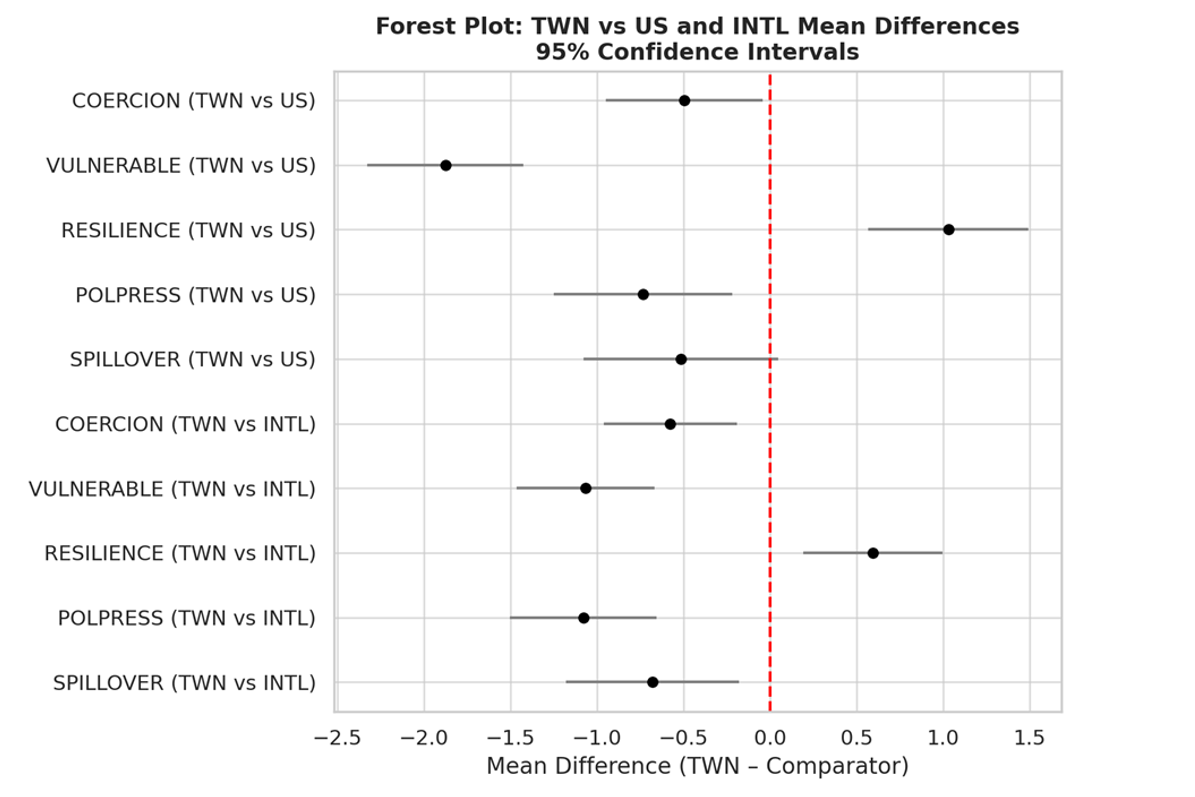
Figure 1: Forest plot of Taiwan vs. International Players mean differences (95 percent confidence intervals).
The heatmap (Figure 2) shows the mean difference between the Taiwanese and international players, which included former U.S., Japanese, UK, and Australian officials. This difference compares how each group assessed the coercive potential for a range of options the CCP could use to compel Taiwan. Bluer cells indicate that Taiwan’s average is lower. Cells that are redder indicate that Taiwan’s average is higher. Asterisks (*) indicate the difference is statistically significant (p<.05), and plus signs (+) indicate marginal significance (p<.1). The discussion below focuses on statistically significant findings comparing the groups.
First, Taiwanese participants rated their vulnerability to sabotage attacks targeting their energy infrastructure alongside a disinformation campaign (i.e., Option B) as significantly lower than the U.S. and INTL. While group-level deliberations on the team did highlight the challenge of disinformation, individual players and the team tended to downplay the coercive option. In contrast, the U.S. and China teams viewed the combination of low-level sabotage alongside a tailored social media campaign to discredit elected officials in Taiwan as low-cost and likely to be effective in eroding trust.
Second, Taiwanese participants were marginally less concerned about sabotage to LNG ports than their international counterparts (p<.1). This assessment extended to statistically significant differences in relation to vulnerability. Taiwanese players saw LNG port sabotage (Option C) as producing less domestic political pressure than their international counterparts (p<.05) while also assessing Taiwan to be more resilient. These divergences show Taiwanese assessments may downplay the severity of an LNG port shutdown and overstate recovery speed, complicating contingency planning for prolonged import disruptions.
Third, this pattern of differential threat assessment between Taiwanese and international players extended to a wide range of cyber operations and political warfare instruments. Taiwanese players saw their energy sector as less vulnerable to spear-phishing (Option O, p<.05) and cyber spoofing (Option N, p<.05). They also assessed Taiwan’s energy sector and port workers as marginally less vulnerable to fabricated labor unrest (Option D, p<.1).
Fourth, gray-zone measures seemed less of a concern to the Taiwanese team despite the central role of those measures in group discussions. Compared to their international counterparts, they saw Taipei as significantly less vulnerable to Chinese-crewed merchant ships staging walkouts or sabotaging a port (Option H, p<.05). When a Chinese maritime militia vessel “accidentally” collided with an LNG tanker (Option J), Taiwan marginally underestimated coercion (p<.1) and significantly underestimated both vulnerability and spillover effects (p<.05). This pattern highlighted a tendency to downplay collision risks and the broader market and diplomatic repercussions such an incident would trigger. Furthermore, assessing boarding of commercial vessels under smuggling pretexts (Option M), Taiwan significantly under-rated coercion and spillover (p<.05) and marginally under-rated political pressure (p<.1). Domestic views downplayed economic delays and diplomatic strain caused by gray-zone maritime inspections.
Fifth, more direct military pressure short of war also appeared to split the Taiwanese and international estimates. In assessing the potential of China’s naval exercise creating de facto no-fly and no-sail exclusion zones (Option K), Taiwanese players significantly under-rated their vulnerability (p<.05) and the risk of spillover (p<.1) but marginally over-rated their resilience (p<.1). The same pattern extends to assessments of PLA aircraft escorting civilian flights (Option L) and GPS jamming at energy ports (Option Q).
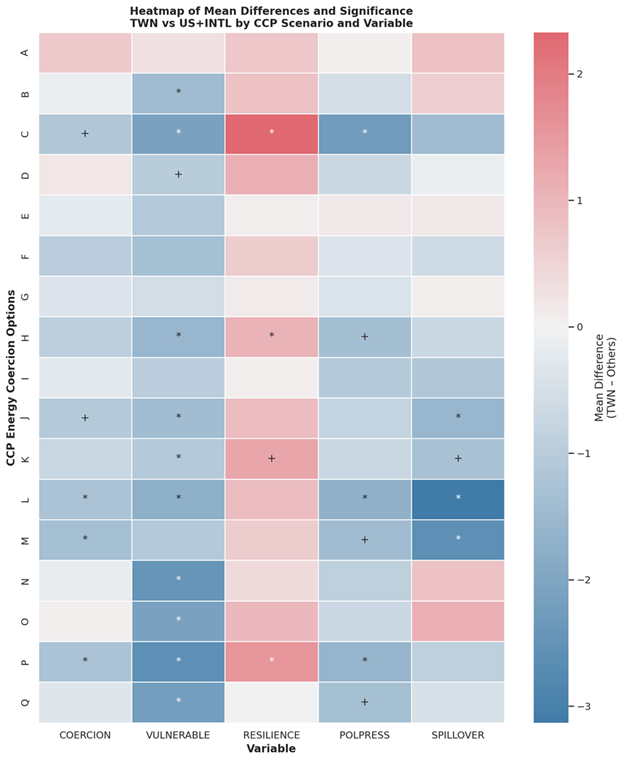
Figure 2: Heatmap of mean differences between Taiwan vs. U.S. and International Players (+ = p<.1, * = p<.05).
During the component of the game when teams developed crisis response options, the teams tended to use information and economic pressure as the default mode of deterrence while avoiding military tools or relegating them to symbolic shows of presence. Where the teams differed was in how much agency they granted Taiwan: while Taiwan sought to reflag, self-escort, and maintain power sovereignty, other teams frequently treated Taiwan as a proxy battleground for great power competition. (See Figure 3.)
Taiwan relied primarily on military and infrastructure tools — such as coast guard-led escorts, power rationing, and contingency grid measures — focused on ensuring continuity under pressure without escalating kinetically. Their approach emphasized resilience, legal maneuvering, and symbolic sovereignty. The United States, in contrast, employed a heavier mix of economic, information, and financial levers, ranging from semiconductor export controls and SEC audit enforcement to platform bans and rare-earth pressure. Across scenarios, the United States shifted from operational deterrence (Scenario 1) to regulatory dominance (Scenario 3), increasingly emphasizing non-kinetic instruments to pressure Beijing and protect U.S. equities — most notably in tech and chip supply chains.
Japan’s response evolved from cautious support to more assertive diplomacy — employing legal and economic tools, such as LNG aid offers, public declarations tied to the 1972 JP-CN Communiqué, and proposals like a maritime security fund. Japan consistently linked its actions to humanitarian and rule-of-law frameworks, creating both political space and legal justification for future escalation.
The international team never committed to kinetic actions but instead converged on legal, cyber, and economic instruments. It deployed tools like insurance subsidies, port reviews, and ministerial visits to Taiwan while also endorsing private maritime security firms and op-ed campaigns aimed at shaping U.S. leadership.
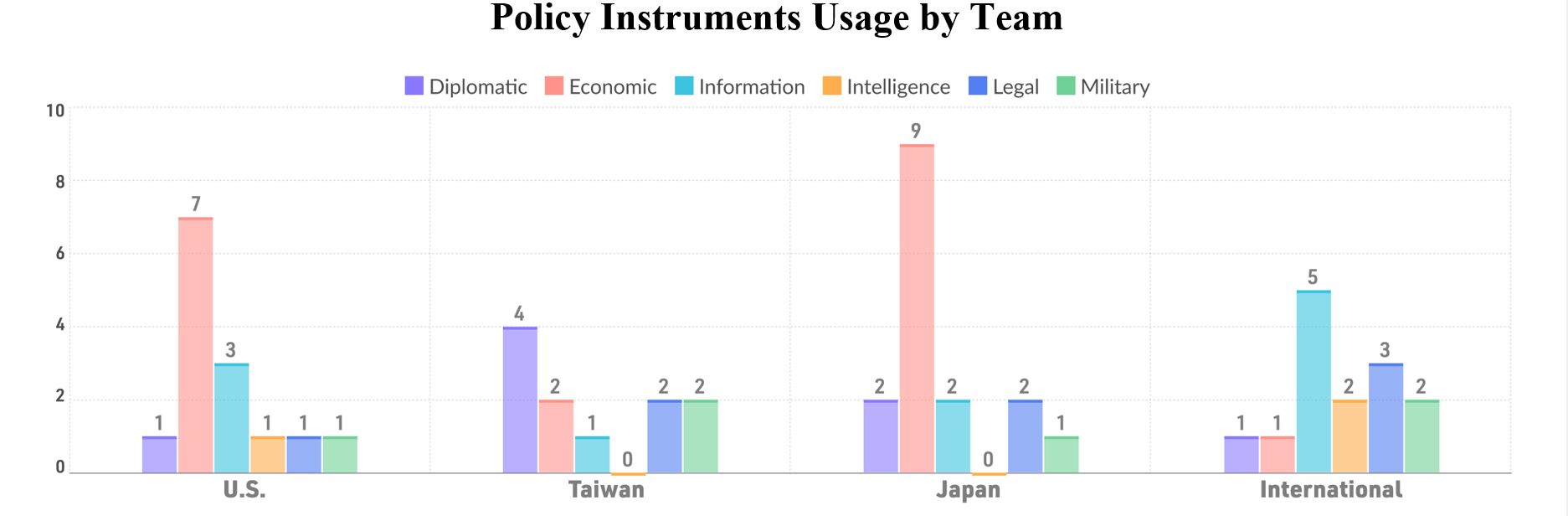
Figure 3: Graph of policy instruments usage by team.
Download Memo
 Download