September 30, 2026 | FDD's Long War Journal
Syria says it thwarted Hezbollah plot; Israel likely target
September 30, 2026 | FDD's Long War Journal
Syria says it thwarted Hezbollah plot; Israel likely target
On September 29, Syria’s Internal Security Forces (ISF) announced that the agency, in coordination with the General Intelligence Directorate, had “thwarted a sabotage plot in the Yarmouk Basin in Daraa” and arrested a three-member cell affiliated with Hezbollah. The ISF described the raid as a preemptive security operation conducted after “precise monitoring” revealed that the cell was attempting to prepare rocket-launching platforms for use in attacks. The statement identified the three suspects only by their initials—”F.K,” “Z.M,” and “L.A.”—and said that the launch platforms were “completely dismantled” following the operation.
The location of the arrest in the Yarmouk Basin suggests that the rocket platforms may have been intended for attacks against Israeli territory or Israeli forces deployed in the buffer zone established by Israel following the fall of Syrian dictator Bashar al Assad’s regime in December 2024.
At its peak in Syria in 2017, Hezbollah, which intervened in the Syrian civil war in support of the Assad regime, maintained an estimated 7,000–10,000 fighters in the country. The group also developed cells in southern Syria composed of local recruits rather than Lebanese Hezbollah fighters. One of these networks, known as the “Golan File unit,” was headed by Ali Daqduq, who orchestrated the 2007 raid on the Karbala Provincial Joint Coordination Center that killed five US soldiers.
Despite the fall of the Assad regime, Hezbollah’s ambitions to maintain a foothold in Syria have not disappeared. The group continues to seek ways to destabilize the country, both to reestablish the weapons corridor it relied on during the Assad era and to use Syrian territory as a staging ground for attacks against Israel. So far, however, the Syrian government has been relatively successful in disrupting a number of these efforts.
In July, Syria’s Ministry of Interior announced that it had foiled an “attempt to smuggle a large shipment of sophisticated weapons across the Syrian-Iraqi border,” adding that evidence gathered during the operation indicated that the shipment was intended for Hezbollah.
Two months earlier, Damascus said security forces had disrupted a major Hezbollah plot to assassinate Syrian officials. In coordinated operations across Aleppo, Rif Dimashq, Homs, Latakia, and Tartus governorates, Syrian forces arrested 11 militants allegedly linked to Lebanese Hezbollah. On April 19, the Ministry of Interior also announced that it had “thwarted a sabotage plot orchestrated by a cell linked to the terrorist Hezbollah militia” in Quneitra Governorate. According to the ministry, the operatives had disguised a civilian transport vehicle to conceal rocket-launching equipment intended for a surprise attack, likely against Israel.
Lebanon has also highlighted armed networks composed of former officers and members of Bashar al Assad’s security forces now operating from Lebanese territory, alongside individuals affiliated with Hezbollah. Following judicial proceedings, confessions from detainees, including former Syrian Air Force Intelligence colonel Manaf Ali Safi, revealed that more than 40 former Assad officers and security personnel were smuggled from Syria’s coastal region into northern Lebanon through illegal crossings, generally in groups of five.
Yasser Alaa al Din, an alleged Hezbollah operative who remains at large, reportedly oversaw the smuggling and training of members of the network. According to the investigation, recruits received instruction at Hezbollah-run camps in the use of drones, explosives, military-grade weapons, and sniper rifles before being sent back to Syria to conduct security operations. The network was allegedly directed by Major General Mohammad Jaber, a former commander in Assad’s Forces.
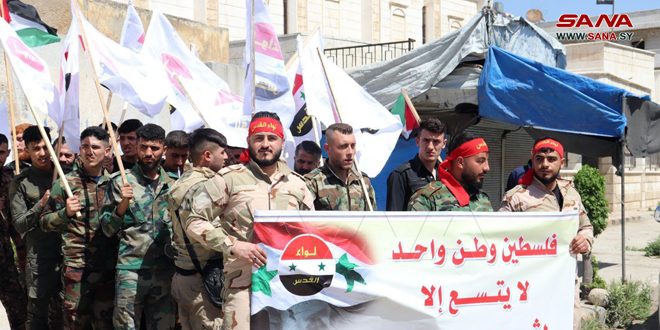
This is consistent with many of the arrests targeting Hezbollah cells in Syria over the past year. For example, among the members of a cell arrested in May, one was a former member of the Syrian army under Assad from Aleppo Governorate, while another had served in Liwa al Qods, a predominantly Syrian-Palestinian paramilitary group aligned with the Assad regime that was later fully integrated into Assad’s army.
Ahmad Sharawi is a senior research analyst at the Foundation for Defense of Democracies focused on Iranian intervention in Arab affairs and the Levant.