July 2, 2026 | Memo
Meet the 13 Palestinians Tasked With Governing Gaza After Hamas
Hamas refuses to disarm, but following two years of war with Israel, it may soon cede its governing role to a transitional authority after ruling Gaza for more than 20 years. It remains to be seen whether Hamas intends for this transition to be permanent — and whether a committee of technocrats can govern the coastal enclave while thousands of gunmen remain under Hamas’s command. Regardless, the 13 individuals profiled in this research memo have accepted the assignment to help implement President Donald Trump’s 20-point plan for peace in the troubled territory — and to rebuild it.
The National Committee for the Administration of Gaza (NCAG) was tasked by Trump’s new Board of Peace with “establishing security, restoring the essential services that form the bedrock of human dignity such as electricity, water, healthcare, and education, as well as cultivating a society rooted in peace, democracy, and justice.”1 It is meant to manage the coastal enclave’s day-to-day affairs, with Hamas disarmed and excluded from governance.
The NCAG is not intended to be a permanent government. The NCAG’s members, chosen by the Fatah-led Palestinian Authority (PA) and Hamas and vetted by the United States and Israel, hail from fields such as housing, finance, agriculture, public health, and municipal governance.2 Ideologically, its members, while Palestinian nationalists, are broadly aligned with the PA and Fatah rather than Hamas. It must be noted, however, that Fatah and the PA have their own long record of corruption, mismanagement, and extremism.3
Of the figures noted below, several served in bureaucratic roles during Hamas’s rule in Gaza. Several others have records of direct confrontation with the Islamist organization. Many have employed harsh anti-Israel rhetoric during the Gaza war, but their views largely align with mainstream Palestinian public opinion.
The NCAG is not expected to operate alone. NCAG Chairman Ali Shaath announced that 5,000 Palestinian police officers would be deployed in Gaza as part of a new transitional security force.4 The NCAG published recruitment criteria for what it described as a “professional, accountable, transparent, and merit-based” police force.5 Applicants must be Gaza residents between 18 and 35 years old, have no criminal record, and demonstrate good physical fitness. Conspicuously absent from the criteria was any explicit prohibition on members or affiliates of Hamas or other armed factions joining the force. The real danger would be the board convincing itself the NCAG, and its police force, can function while Hamas retains its weapons. Additionally, Trump’s peace plan envisions the deployment of an International Stabilization Force (ISF)6 to supplant a disarmed Hamas, with Indonesia, Morocco, Kazakhstan, Kosovo, and Albania expressing readiness to commit troops.7
Setting aside concerns about the efficacy of a force that would not likely confront Hamas, this memo endeavors to determine one key question: Can the United States and Israel trust the NCAG? On the one hand, many NCAG members hold views that Israel considers fundamentally adversarial — even though they reflect the Palestinian mainstream. Some maintain associations with controversial organizations, such as the Al Mezan Center for Human Rights, sanctioned by the United States, and the European Coordination of Committees and Associations for Palestine, both of which are openly hostile to Israel. On the other hand, any new entity that supplants Hamas should be welcomed — albeit cautiously. Below are the members of this new body and a summary of their backgrounds.
Ali Abdul Hamid Shaath
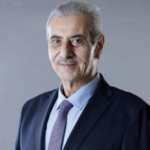
Source:آل شعث Al-Shaath on Facebook.
Chief Commissioner of the Palestinian National Committee for the Administration of Gaza
Ali Shaath, a native of the Gaza Strip, chairs the NCAG. He was born in Khan Younis in southern Gaza in 19588 and later went on to study civil engineering in Cairo.9 Shaath has held several senior positions within the Palestinian Authority, including serving as undersecretary at both the Ministry of Planning and International Cooperation and the Ministry of Transport and Communications10 — two apolitical roles. He later chaired the Palestinian General Authority for Industry, the Palestinian Housing Council, and the Palestinian Ports Authority — roles not viewed as political either. He also participated in Palestinian final-status negotiations committees in 2005, focusing on border arrangements and maritime access.11
Israeli reporting notes that while Shaath has a clear institutional affiliation with the Palestinian Authority, he was not involved in shaping core political decisions.12 Shaath associates, cited by Israeli media, describe him as someone who “has always stayed away from politics.” Israeli media views him as a Fatah figure aligned with the non-violent Palestinian camp. Still, Shaath mentioned on a podcast that he was arrested by Israel when he was a child for throwing rocks at IDF soldiers.
When outlining his vision for post-war Gaza, Shaath said that clearing rubble would be the first step in reconstruction.13 He floated the idea of dumping rubble into the sea and creating “artificial islands” off Gaza’s coast.
Abdul Karim Ashour
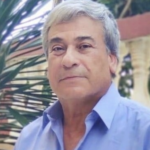
Source: Real Media.
Agriculture Portfolio
Abdel Karim Ashour was assigned to the agriculture portfolio within the NCAG. He previously served as the director of the Palestinian Agricultural Relief Committees14 and as the director of Reef Finance Company. Ashour also served as vice chairman of the board of the NGO Development Center, as a board member of the Gaza Community Mental Health Program, and as a founding member of the Palestinian Non-Governmental Organizations Network. In addition, he founded several civil society organizations and worked as an economic adviser to the Palestinian Authority.
On social media, Ashour expressed the view that the continuation of Hamas’s rule in Gaza serves Israeli interests by sustaining an environment that justifies a “prolonged blockade, stalled reconstruction, and fragmentation of the territory.”15 At the same time, he argued that expectations of Hamas’s surrender, disarmament, or departure from Gaza are unrealistic. He has explicitly referred to technocratic governance as a limited, nonpolitical effort to mitigate civilian suffering and preserve the government’s functionality rather than replacing existing actors in Gaza.16
Jaber al-Daour
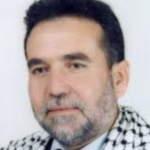
Source: ا.د. جبر الداعور on Facebook
Education Portfolio
Jaber al-Daour is an established figure in Palestinian higher education. He holds a Ph.D. in business administration from the University of Manchester in the United Kingdom and a bachelor’s degree from Mansoura University in Egypt.17 According to Arabic media sources, al-Daour served as the vice president of Al-Azhar University-Gaza for financial and administrative affairs, as well as president of Al-Quds Open University — two entities widely associated with Hamas.18 Outside of academia, he served as the chairman of Northern Gaza’s Association of Accountants and Auditors and as a member of Palestine University’s board of directors.
According to Al-Araby Al-Jadeed, al-Daour is “considered to be affiliated with what is known as the ‘Democratic Reform’ current, which is led by Mohammed Dahlan,” former senior Fatah security chief and Gaza strongman who later fell out with the Palestinian leadership.19 Dahlan is now aligned closely with the United Arab Emirates.
Bashir al-Rais

Source: Eqtesadia
Finance Portfolio
Bashir al-Rais is a financial and development expert from the Gaza Strip. He holds a Ph.D. from Imperial College London in small and medium enterprises (entrepreneurship).20 Al-Rais was a lecturer at Birzeit University in the West Bank, and he has contributed to financial studies related to infrastructure and development projects in the Gaza Strip. In 2013, a presidential decree by Mahmoud Abbas appointed him to the board of the Palestine Monetary Authority.21 A report from 2018 refers to al-Rais as adviser to the Palestinian Authority’s prime minister at that time, Rami Hamdallah.22
Al-Rais also holds the position of chairman of the European Coordination of Committees and Associations for Palestine,23 a “network of 46 organizations, NGOs, trade unions and solidarity groups from 19 European countries, dedicated to the struggle of the Palestinian people for freedom, justice and equality.”24 The network frequently calls for legal action against Israel and the boycott of Israeli companies and products.25
Aaed Yaghi
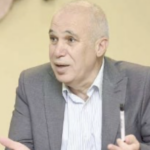
Source: quds_feed on X
Health Portfolio
Aaed Yaghi is a Palestinian physician in Gaza. Born in 1967 in the coastal enclave, Yaghi served as the director of the Palestinian Medical Relief Society in the Gaza Strip and is the head of the National Rehabilitation Society, which helps people with disabilities.26 He is also a member of the advisory council of the Hamas-run Gaza Health Ministry and acted as a liaison for the Palestinian Non-Governmental Organizations Network in the coastal enclave. Politically, Yaghi is a member of the Palestinian National Initiative (PNI) and was a candidate on the PNI’s electoral list in the Palestinian legislative elections scheduled for 2021, which were later cancelled.27 Broadly speaking, PNI is a leftist political party that “asserts the right of the Palestinian people to resist occupation by all possible methods” and “to boycott and impose sanctions on the Israeli occupation apparatus.”28
In several interviews over the course of the Gaza war, Yaghi stated that Israeli forces do not want the presence of the United Nations or other international organizations in Gaza because it would “prevent the exposure of crimes and abuses committed [by Israel] against civilians and the public health system.”29 He also said that Israeli forces are “deliberately targeting Gaza’s health care infrastructure and are repeatedly violating international humanitarian law … in the Strip.”30
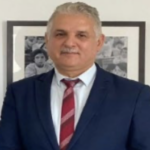
Osama al-Saadawi
Source: قلعة الجنوب – رفح on Facebook.
Housing Portfolio
Osama al-Saadawi is a civil engineer from Rafah born in 1964. He earned a bachelor’s degree in civil engineering from Birzeit University and a master’s degree in civil engineering from the Islamic University of Gaza. He served as minister for entrepreneurship and empowerment in the Palestinian Authority from 2019 until 2024. Prior to that role, he was the director general of the Palestinian Housing Council in the Gaza Strip from 1998 to 2018.31 Earlier in his career, from 1995 to 1998, he worked as a planner at the Ministry of Planning and International Cooperation, contributing to management of the Gaza Port project. Between 1992 and 1995, al-Saadawi was a civil engineer with the United Nations Relief and Works Agency for Palestine Refugees (UNRWA),32 an entity that has come under American and Israeli scrutiny for alleged collaboration with Hamas.33
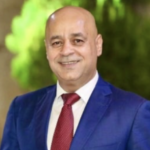
Sami Nasman
Source: رواتب السلطة الوطنية الفلسطينية – رام الله on Facebook.
Interior Portfolio
Sami Nasman was born in 1967 in Gaza and spent most of his life in the Sheikh Radwan neighborhood in northern Gaza.34 According to the London-based Asharq al-Awsat, he joined the Fatah Youth Movement and became active during the First Intifada.
Following Hamas’s takeover of the Gaza Strip in 2007, Nasman fled Gaza, fearing for his life, amid accusations that he had overseen the arrest and pursuit of Hamas members. He moved to Ramallah, where he became responsible for managing the Gaza portfolio from the West Bank. In 2015, Hamas accused Nasman of directing clandestine networks inside Gaza from Ramallah to foment unrest and carry out assassination attempts against Hamas leaders and officials. In March 2016, a Hamas-run court sentenced him in absentia to 15 years in prison, citing confessions by Palestinian security personnel who claimed Nasman had recruited them to carry out assassinations.35
Following the October 7, 2023, attack on Israel, Hamas again accused Nasman of overseeing an intelligence network that allegedly exploited the entry of international and Arab humanitarian aid convoys into the Strip for espionage purposes.
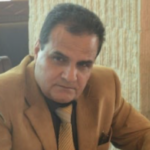
Adnan Abu Warda
Source: المكتب الحركي المركزي للمحامين – غزة on Facebook.
Justice Portfolio
Abu Warda was born in 1955 and currently lives in al-Rimal in Gaza City.36 Mahmoud Abbas appointed him in June 2019 as a judge to the Supreme Constitutional Court in Ramallah.37 He has no publicly documented political affiliation. However, following his appointment, a Facebook page associated with the Central Movement Office for Lawyers-Gaza — an organization that includes lawyers from the General Assembly of the Palestinian Bar Association who support and are affiliated with Fatah — publicly congratulated him.38 According to the Abu Warda family Facebook page, he also served as head of the Deir al-Balah Prosecution Office and was a deputy public prosecutor in Gaza prior to Hamas’s takeover of the Gaza Strip.39
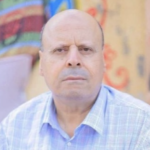
Ali Barhoum
Source: قلعة الجنوب – رفح on Facebook.
Municipal Affairs, Local Authorities, and Water Portfolio
Ali Barhoum is variously described in reporting as a doctor or an engineer40 — but he likely holds only a master’s degree in public health from Al-Quds University.41 Barhoum served as the director general of the Rafah Municipality from at least 2006 until at least 2013.42 A 2015 report says Barhoum served the Rafah municipality in various capacities “for more than 30 years.”43 He apparently served as the executive director for the Joint Services Council for Solid Waste Management between 2019 and 2021,44 with responsibility for Khan Younis and Rafah, after which he worked as a consultant.45
Barhoum, according to Israeli media, has echoed some Hamas-aligned wartime rhetoric, including accusing Israel of committing massacres and genocide during the October 7 war.46 No direct link between Barhoum and Hamas or any other Palestinian militant faction was found — save for the fact that he served in Gaza’s administrative bodies while they were controlled by Hamas.
Hanaa Tarazi
Source: International Committee of the Red Cross
Social Affairs and Women’s Affairs Portfolio
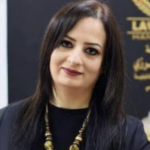
Tarazi’s place and date of birth are not readily available in open-source material, though she appears to hail from the Gaza Strip. She is a Christian, yet she studied law and graduated from Cairo’s Al-Azhar University, an Islamic educational institution. In 2018, she received a license to practice Islamic law, or Sharia, in the Gaza Strip.47 Tarazi also runs a private law and legal consulting office and has served as deputy director of the Al Mezan Center for Human Rights — which classified Israel’s conflict with Hamas in the Gaza Strip as a genocide.48 The U.S. Department of the Treasury designated the Al Mezan Center in September 2025 under Executive Order 14203, which imposed sanctions on the International Criminal Court and entities and individuals assisting the ICC’s investigation of U.S. citizens and U.S. allies.49 Tarazi herself is not sanctioned, however. NGO Monitor alleges Mezan has “ties to terrorism,” citing its participation in events alongside representatives from various militant groups.50 Tarazi appears to be politically unaffiliated.
Omar Mohammad Hassan Shamali
Source: Sama News.
Telecommunications and Communications Portfolio
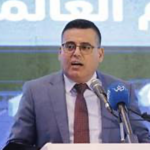
Omar Mohammad Hassan Shamali was reportedly born in 1975 in Gaza City’s Shujaiyya neighborhood.51 He is a longtime executive with Paltel (Palestine Telecommunications Company) group and its mobile operator, Jawwal.52 Paltel’s 2019 annual report listed him as Jawwal’s Gaza regional manager, a position he continued to hold through at least 2022.53 He has criticized Israel, saying in 2023 that Israeli restrictions on connectivity in the Gaza Strip, which prevented the development of advanced generations of mobile service, have harmed Gaza’s economic, education, and health sectors.54
There is no direct evidence in open sources suggesting that Shamali was personally involved in any violent or extremist activity, either independently or on behalf of an armed or extremist group. To the contrary, the Al Mezan Center for Human Rights reports that in 2018, Gaza’s Internal Security (Hamas’s security force) summoned and detained him and other Jawwal employees, pressuring them to provide subscriber information after an attack on the Palestinian Authority prime minister’s convoy. Shamali insisted that the authorities provide him with a formal legal request before handing over the requested data.55
Ayed Awni Abu Ramadan

Source: Shutterstock
Economy, Trade, and Industry Portfolio
There is no open-source information on Ayed Awni Abu Ramadan’s date or place of birth. He is the chairman of the Gaza Chamber of Commerce, Industry, and Agriculture, a position he has held since 2023.56 He is the founder and managing director of the Super Food supermarket chain, established in 2020, and he has served as a program director at the Palestine Investment Fund, a sovereign development fund.57 He studied civil engineering at Syracuse University, graduating in 1985.58 Makor Rishon, an Israeli newspaper alleges he “published content that glorified the intifada, mocked Israeli soldiers, expressed solidarity with imprisoned militants, and used imagery that presented the whole of the State of Israel as Palestine.” 59 Additionally, he served as the director of the administrative department of the Palestine Islamic Bank (Gaza). Israel alleges that the bank conducted transactions with Hamas in 2007.60
Husni Salman Hussain Al Mughni
Source: التلفزيون العربي on Facebook
Tribal/Clan Affairs Portfolio
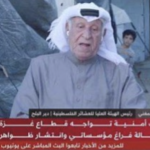
Husni Salman Hussain Al Mughni (kunya Abu Salman) was born in 1941, and his place of birth is likely the Shujaiyya neighborhood of Gaza City.61 He holds a diploma in physical education training from Gaza, which he obtained in 1960, and a B.A. in Arabic language from Beirut Arab University, class of 1985.62 He taught in Egypt from 1960 to 1968 and Kuwait from 1969 to 1992. He worked for the Palestinian Authority, providing “political guidance,” until he retired in 2005 with the rank of brigadier general.63 Since then, he has assumed the role of general coordinator of the High Commission for Tribal Affairs in Gaza.64 He does not appear affiliated with Hamas or other Gaza-based armed groups. He joined Fatah in 1968, and Arab media has characterized him as one of UAE-based Mohammad Dahlan’s loyalists. 65
Mughni has a history of opposing the Oslo Accords, voicing his support for “resistance,” including armed action, as well as the “liberation of all of historical Palestine” and the return of all Palestinian refugees to their places of origin.66 He has also expressed support for “implementing religiously prescribed punishments” (Hudud) against those he labels collaborators or criminals and has endorsed security action against them until courts are functioning again.67 This may have been an attempt by Mughni to prevent clan conflict through “field courts” until the return of formal institutions. He has also been quoted as opposing revenge killings and excesses against those he deemed collaborators while also holding them accountable as a “religious and national duty.”68
Conclusion
Given the limited pool of individuals who have the required professional qualifications and no disqualifying political ties, the appointees to the NCAG are as acceptable a group as one might hope for. Their affiliation with or leaning toward Fatah poses its own set of problems, but placing the governance of the Gaza Strip in their hands removes it from the grip of Hamas, thereby reducing the likelihood of renewed conflict with Israel. Based on an examination of their resumes, the NCAG’s appointees appear to be individually competent, with extensive experience in the portfolios to which they have been assigned. Furthermore, they do not appear to be personally corrupt despite their pro-Fatah leanings.
Nevertheless, some members of the technocratic body have shown an unwelcome receptiveness toward Hamas. For example, while Abdel Karim Ashour has argued that Hamas’s continued rule ultimately benefits Israel, he has also asserted that the group’s disarmament or outright removal is unrealistic. This may simply be pragmatism, but some members have aired sentiments that align with Hamas thinking. For example, Aaed Yaghi, who served in the Hamas-run Gaza Health Ministry, is affiliated with the Palestinian National Initiative, a political party that favors resisting Israel “by all possible methods” and has publicly accused Israel of deliberately committing war crimes.69
Other members have also been part of Hamas-run Gaza civilian institutions, like Osama al-Saadawi and Arabi Abu Shaaban, who have served in administrative roles but have no explicit affiliation or membership with the terrorist group. Most concerningly, several members have showcased support for terrorist activity. For example, in addition to Aaed Yaghi’s support for a political party that favors using violence against Israel, Husni al-Mughni has openly supported armed resistance, advocating the “liberation of all historical Palestine,” effectively denying Israel’s right to exist.70 Other members have associations with and have assumed leadership roles in questionable and sanctioned entities, such as Bashir al-Rais, who served in European advocacy networks promoting boycotts and legal action against Israel, and Hanaa Tarazi, who served in an organization sanctioned by the U.S. Treasury.
These stances suggest that while the NCAG may be operationally competent and less radical than Hamas, parts of its leadership remain ideologically proximate to those who wish to do Israel harm. This casts doubt on its ability to represent a genuinely moderate alternative for Gaza. It also raises several questions regarding the NCAG’s potential effectiveness, even if the best assumptions about these appointees bear out.
First and foremost, there is the possibility of a Hamas resurgence. It remains far from conclusive that a technocratic government like the NCAG will prove capable of preventing Hamas from rebuilding its societal influence and regenerating its military capabilities — even if the expected introduction of ISF troops into the coastal enclave occurs. Second, the NCAG faces an uphill battle in deradicalizing the population in Gaza — if it even seeks to do so — and decoupling it from reliance on Hamas after a 20-year symbiosis between the terrorist group and its civilian environment. Third, the NCAG’s legitimacy in Gaza may suffer if it undertakes this deradicalization process. Hamas, Palestinian Islamic Jihad, or other extremist actors may very well seek to undercut the process by framing it as serving Israeli interests and liquidating the Palestinian cause.
Maintaining transparency and competence remains a final question. Even assuming the rectitude and cooperation of the appointees themselves, they will have to recruit and oversee a sizable bureaucracy to run the Gaza Strip. They will have to ensure that recruits and existing personnel are sufficiently competent and scrupulous, as well as unaffiliated with extremist groups or factions. Otherwise, Gaza’s new bureaucracy will become Hamas’s backdoor for a resurgence to power.
It is therefore essential, before the United States gives its full backing to this body, that Chief Commissioner Ali Shaath and his subordinates present a detailed plan on how they intend to address these challenges — both an overall plan and one specific to each portfolio. The Board of Peace must be able to review the NCAG’s plans and provide input on whether their recommendations are realistic and achievable, with periodic reporting by the NCAG to Washington on implementation milestones and progress. NCAG members who are affiliated with U.S.-sanctioned entities, as well as those who have publicly endorsed “armed resistance,” should be subject to heightened scrutiny by Washington.
Similarly, members who were part of Hamas-run civilian institutions should be monitored carefully to ensure their service in those institutions did not reflect political or ideological allegiance and will not shape their conduct as part of the NCAG. The United States must also ensure that the NCAG does not incorporate Hamas or other terrorist affiliates into its police force, and the NCAG should make this prohibition explicit in all recruitment criteria. The NCAG must likewise establish a rigorous vetting mechanism, conducted in coordination with the United States and Israel, to prevent such infiltration.
All things considered, the NCAG may represent the least-worst available option for governing Gaza now, but it is not yet a self-evidently moderate or reliable partner. It is a competent body from a technical point of view, but that is not the only metric for success; its members are not true moderates or advocates of coexistence with Israel, while its efforts to govern will have to contend with Hamas’s enduring imprint on Gaza. If Washington intends to invest diplomatic capital and resources in this experiment, it must do so conditionally and with clear benchmarks. Continuous oversight and monitoring of the members of the NCAG are necessary to prevent it from becoming a temporary administrative body behind which Hamas regenerates and maintains its hold over Gaza.
